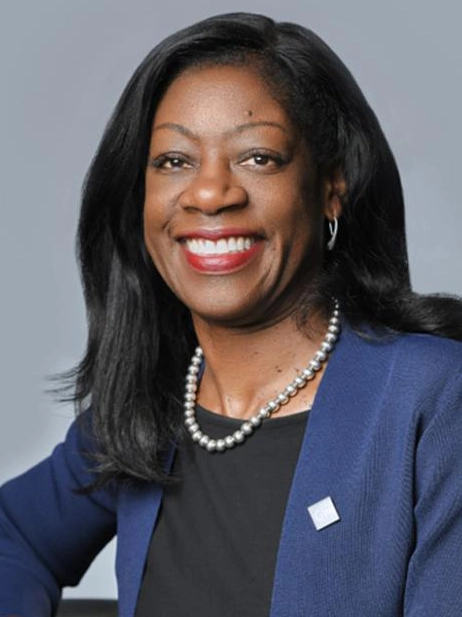
Mike: Welcome to Status Check with Spivey, where we talk about life, law school, law school admissions, a little bit of everything. Today, we're very much in the law school and law school admissions category. I'm excited to be with Dean Dayna Matthew, who's the Dean of George Washington Law School. She and I actually have some overlap. She was Vice Dean at Colorado Law, where I spent some time. She knows the tiny town in Colorado I live in. It's a natural discussion and it's like being with a familiar friendly face. But it is a wonderful discussion due to the insight and advice Dean Matthew gives, not just about the admissions process, which we do talk about, and we talk about this back-to-back year of surge of applicants, but also why you should choose going into law or maybe not. Why you should choose which law school you went to—Dean Matthew went to UVA Law School. We're not doing this intentionally; I think three of our last five guests did go to UVA Law. She was the editor of the Virginia Law Review. She graduated at the top of her class at UVA Law with many accolades. We will link her bio.
She talks about what it's like to be a law student back when she was a law student versus now. She talks about something that's on everyone's mind, which is, is AI going to be to us or for us? So as a lawyer, is that going to be thrust to you and hurt with the employment prospects, or are schools like GW—is it going to be given for you, and are they going to teach you how to use AI so that you can actually add value as a first-year associate and get a job? That, to me, is the best possible conversation we could have with applicants and students on the planet.
So we get into employability, we get into a lot of things, we end on society and some final thoughts and advice. If you're going to tune into any conversation, this is a great dean to listen to, who has a global perspective. Without further delay, this is me and Dean Matthew.
Hi, Dean Matthew; great to see you. Thanks for making the time.
[2:17] Dean Matthew: I'm so glad to be here. You gotta call me Dayna, though.
Mike: Hi, Dayna. Great to see you. I know, like informally, offline, I call you Dayna.
So, of interest to me, I think of our last five guests, three have gone to UVA Law, which is by chance. We're not hand-selecting UVA Law graduates. But the admissions process was different back then. What made you target the schools that you targeted, what had you matriculate to UVA Law, and what was the admissions process like when you applied?
Dean Matthew: Oh, it was so different from today. First of all, I'm going to sound as though I'm a little arrogant. I applied to two schools. I was working as a commercial banker in New York City, and I wanted to stay in New York City. I applied to Columbia and got waitlisted, and applied to UVA and got into UVA. So there you go. That's where I'm going.
I chose UVA for two reasons that are not different from the reasons that students are choosing law school today. One, they had a reputation for, and they delivered on this, just being a really warm, collegial school. I wanted to go someplace where I could learn a lot of law and make friends and do it in an atmosphere that was fun and collegial. They had that reputation. And then jobs. At the end of the three years, I wanted to make sure I had a great shot at a career. So the student experience was wonderful, and my job prospects were wonderful, and that's why I decided to go to UVA. A lot of what people are thinking about today, too.
[3:36] Mike: Yeah. If you were an applicant today, would you add anything? So fit would be one thing—and I always think if you can afford it or the school can help with the travel expenses, the best way to find fit is not to read on message boards about schools, because generally it's the upset people who post about their schools. It's the happy people that just go on being happy. So visit would be the best way. So fit by visiting, job outcomes—is there anything else you would add to that?
Dean Matthew: Yeah. Today, students have to think about at least two other things.
[4:05] I think fit includes this question of, why should people go to law school at all right now? We are talking about the kind of issues that I think can be described as existential with respect to what law school means to democracy, to separation of powers, to rule of law. The kinds of questions that students have to ask themselves today is, does the law school I'm going to prepare me to answer these big questions or at least help me think about what law's role in society is today? And that's what I would be asking myself, if I were applying to law school today. I would want to go to a law school that's thinking or helping me to think carefully about my role in the democratic process, in the rule of law, in what it means to use law to advance a just society.
So those existential questions would be on my mind today, but I have to say, the jobs market is even more important today as a question for students to ask as they're getting ready to invest a significant amount of time and money in the law school educational process.
[5:11] Mike: And why is that more important today than when you applied? Is it because of the rapid infusion and change in technology? Or you tell me. Like, when you applied, it was still important to be able to get a stable job. No less so today, but maybe the atmospheric conditions are different today.
Dean Matthew: So, technology is one of at least three other reasons why this market is very, very different from the market that I applied to law school in. For example, let's use the OCI—the on-campus interview, affectionately called “OCI,” invited hundreds of firms to campus to talk to students between their first and second year in August before they began their second year. And the process was orderly, predictable, and you could expect it to be the same as it had been for decades before.
Now, most firms are hiring by direct hire. OCI is almost a thing of the past. Many, many large firms have filled their first-year class by May, based on one semester of first-year grades. Many firms are using that pipeline of first-semester grades and hires to fill their permanent classes. So this game bears no resemblance to what we were experiencing. And students have to be prepared for facing that different kind of dynamic market.
[6:27] Now that's the big law on-campus interview process. Students who are interested, for example, in public interest and public relations law, I'm very mindful of the differences that they face. Our school places about 17% of its graduates in public service, largely in the federal government. Well, we know that that's changing dramatically. On January 21st, 50 of our students got pink slips from the federal government, and that has been a dramatic shift.
So students have to be thinking about their public service, public service organizations that are doing the kind of interest work that this administration has targeted as potentially illegal according to the Pam Bondi memo. All of that is different, and the students have to be mindful of how they'll navigate those differences in the jobs market.
But after all, we are running law schools as professional schools. They are introductions to meaningful lifelong careers. We are preparing students for careers as a professional school. And so the admissions process has to take into account these changes in the job market.
[7:34] Mike: Dayna, I'm glad you touched on that increased pace of hiring in particular. That's something we podcasted on and has been on the minds of a lot of law schools. But another thing that's on the mind from law schools, I think you probably saw yesterday, the volume summary, the new data for people applying.
Dean Matthew: The data is dramatic, and it's changing day to day. I think today the report was that applications for law school are up over 33%. I have to tell you that this is a great thing from my perspective, but it probably reflects instability in the job market as well. When people have difficult time finding jobs, a lot of times they go to graduate school to prepare themselves better, to be competitive on the other end when they graduate. I would say that's the partial explanation.
Another explanation for why people are applying to law school particularly—and this is my surmise, I don't have data to support it, but I think I'm right about this—fter elections, we see increases in interest in law school in particular. During times when the kind of large questions about our democracy, separation of powers. and how selective prosecution might be affecting the Supreme Court's decision on the shadow dockets, these are big law questions.And what we are seeing is that people are very, very interested in participating in finding the answers to how our democracy will see its way through these very difficult challenges that we are, as a nation, facing.
The students that are interested in applying to law school now are not just, in my opinion, escaping a difficult job market. They're not just running from something. I have the sense that they're running to something. They're running towards solutions, shaping the kind of country that they want to live in, the kind of legal system that they'd like to preserve, protect, or promote. But these large questions are drawing people who want to have an impact, who want to see law used as a tool to shape society, and from a legal educator standpoint, that is a very exciting increase. That surge is bringing very exciting people into the legal academy.
[9:52] Mike: It's the million-dollar question, but let me first touch on something you said at the very beginning, that the data is up even more today than yesterday. I think yesterday it was 32.9% and today it's 33.5%. The point being, the early data is always the most volatile because there's less data points, the power of the data. Right? There's less power behind it. So the data's going to bounce around early. I really want our listeners, if anything, to, you know, put a little pin in this point. Things are going to go up, and then they'll go down and LSAT bandwidth categories will go up and down, and that is every year early, because there's no power behind the data; there's fewer numbers. As we get into January, February, March, these things stabilize like heck, and then if you move to the summer, they stop even moving.
But there's going to be a lot of movement early on. And I only want to say that because it's impossible to predict whether it's going to move up or down. We do think it's going to move down. I can't imagine, with last cycle being up 18.3% in applicants, this cycle being up 33.5%. It's just—the demographics don't support that. The number of people graduating from college don't support that. So it'll end up up but not that much.
So what's moving it? And there's a big question. Is it the unemployment out of college, which for the first time ever—you might know this—but they've been keeping this statistic since 1980. The first time ever that unemployment at a college beat the nationwide unemployment rate. So people with a college degree are actually struggling more than the nation average. That's the first time since 1980.
The people in your arena, Dean of Admissions, understandably, rightfully so, talk a lot about going towards the law and the rule law being front and center. I think maybe that's why; that's a fraction of it. I think the bigger fraction is people just can't find jobs. Which of those is driving this? Obviously both.
But the reason why I'm so curious is, we're looking at a really competitive cycle this year. So it's good for law schools, and I just had a long post on this on LinkedIn a day ago. It's great for consulting agencies like ours. Great for people like LSAC. But I think we need to keep in mind that it's not going to stay like this forever. and it's really stressful for applicants right now, looking at the numbers and how competitive the cycle will be.You know, we'lll get into it to mitigate that stress, and we'll post another podcast today about that.
If you were an applicant seeing the numbers, but with your brain, with your big brain, how would you talk to someone applying? Let me give you an example how I would. Apply to a broad range of schools. Don't apply to just two schools, like you did. And what else for applicants who might be feeling a lot of anxiety right now?
[12:33] Dean Matthew: Yeah. A couple of things. Mike, nobody's better with the numbers than you are. I wouldn't rely on the projections of anybody else more than I would rely on you and your team to tell us that, while these are bouncing around early on, they're going to settle down. I'm compelled to recall, however, that where we were this time last year, you said much the same thing, but from a very different base. I mean, we were looking this time last year at an increase in the order of 25%, and you wisely and correctly projected that these would settle down, just as you are today. But the numbers are bigger today.
And so to answer your question directly, if I were a student in this competitive cycle, I'd be paying close attention to what happens at the law school once I begin my education. In other words, what's my student experience going to be like? And this, if I can be really blunt, is not something that you see by looking at a rankings number. Law schools have personalities. They have brands, if I can say it that way. Each of us in the legal academy work really hard to being both distinguished and distinctive. What is distinctive about the school that you as an applicant are considering that matches the aspirations that you have for yourself as a person and as a lawyer?
That doesn't mean you have to, if you're an applicant, know exactly what you want to do. Even though I applied to only two schools, I knew exactly what I wanted to do. I had left Wall Street and wanted to become a real estate lawyer. And Mike, it wasn't five minutes into my experience that I realized that was a fool's errand, and I became a litigator, something completely different.
So really, I am not suggesting that you have to choose your law school knowing what your future practice area will be, but there are characteristics, personality types of each law school that will serve your educational aspirations, and you as an applicant should pay attention to that. Let me give you some ideas about what that might be. I went to UVA in a very small, bucolic town. It was a school that admitted about 150 students per class. I got to know most of my class very well. It was small; it was intimate. The school paid a lot of attention to educating people at that time with an educational philosophy called Law and Economics. I was an economics major. It made lots of sense to me. That plus the softball league, boom, I am going to UVA. All of that makes lots and lots of sense. So, in addition to their other job market and the things that I said earlier, what was going on at that school really fit who I was as a person and who I wanted to become as a lawyer. I wanted to think about the law in economic terms, and I got that from UVA. It was a wonderful opportunity for me.
A student coming to Washington, DC to study law at a school the size of mine, of Georgetown, is coming for an entirely different experience. The student experience here is “city as classroom.” We include and engage students in all of the courts, all of the administrative agents, all of the nonprofit organizations. You come to a school of our size, of Georgetown’s size, of Harvard size, of NYU's, you go to those schools to have experiences that are large and impactful in the building as well as outside of the building.
So these are ways in which you are asking as an applicant, not what the ranking number is, but what's the experience I'm getting ready to have? Let's say you're a student that's coming out of a career in health. Well, one of the things you're going to be looking at is schools that have really deep curricula in health law. You'll be looking at St. Louis, you'll be looking at Houston, you'll be looking at Seton Hall. There are ways in which what's happening at the school itself, characteristics of the brand of the school are going to help drive your decision-making.
[16:45] Mike: I want to hit on something that you mentioned at the very beginning. Within months, you switched careers. So there's a lot of people applying to law school, obviously—we've already hit on that. There are a lot of people listening to this podcast who will switch careers. Correct me if I'm wrong, I can't think of a more fungible professional degree than a JD.
Dean Matthew: Without question. We completely agree. My own career path is a testament to that. I have had what I consider to be five separate rewarding and wonderful careers, most of them unpredicted. I had no idea that I was going to become a law dean, a law administrator. I have loved it. That career follows on my having litigated and tried lots of jury trials. It follows on my having had the pleasure of serving in government and administrative and regulatory law agencies. I have been in nonprofit work, private practice work, legal administration, and who knows what's next? It is the most versatile degree. And I sound like a little bit of a law school commercial, but I'm going to say. I sincerely believe that the reason is because law school teaches one how to problem solve and think. And that is an invaluable skill whether you practice law or not.
Mike: Yeah. I mean, and I can get the counter of your degree. My PhD program was higher education leadership. There's only one thing you can do with that, and I've done it. So I've been in higher education leadership for my whole career.
I want to thank you also for saying that we're good with the data. We historically have been really good with the data. Last year was a bit of a surprise to us. When things were up 36%, I was on with Don Rebstock—you may know the name; he's the Associate Dean of Northwestern—and both Don and I were predicting, we thought it would drop, I think Don said 5%; I said 10%. Only dropped 18%. I'm going to hedge more than the past where I was on a five-year run of getting this thing spot on. What I'll say is, I think things are going to go down, but I'm hesitant to predict yet how far things will go down. We can switch off this. We only have two days of data. We do know for a fact it's going to be a competitive cycle. We do know for a fact a JD is a very fungible degree and right now the job market is good.
[18:53] If you were—switching more to your lane and out of my lane—what advice would you give to law students today? And I'm just going to listen, because you're the expert here.
Dean Matthew: Law students. Oh my gracious. There is no more exciting time to be a law student, in my lifetime, than right now.
I reduce my law student advice to three things. One, dig in and make the very most of this experience. Wherever you're going to law school, take advantage of everything that your law school has to offer that is appealing and that you can fit into your schedule. This is the most exciting time, in my view, no matter what your area of interest and expertise is. If you want to learn about capital markets, if you want to learn about changes in international law, if you want to learn about the law of war, the world right now is offering you object lessons in just about every area of law that there is.
Let's take one that everyone agrees is changing the face of law: artificial intelligence, AI and the law. This is an area in which our legal system is like a plane being made as we’re flying it. We’re buying the parts. W’'re trying to figure out what the blueprint looks like. And what law students have an opportunity to do today is to see themselves not just as students of the law, but makers of the law. Not just as students, as students of what is, but what ought to be. So one, dig in.
Two, see your role as integral to what the legal regime you're interested in practicing in will be in the future. I love to tell law students that, yes, I am a legal realist. There's no question about that. There's no question about whether you have an originalist or a non-originalist view. Law is being made differently than ever before. I would say to law students today, see yourself as one of the people that will shape the future. See yourself as an actor, as a leader, as an integral part of the world that we're going to live in and the society you'd like to see it in.
That, for me, is a second piece of advice that I would've loved to have received as a law student. Frankly, it would've taken my stress level down, because instead of coming and thinking that I was studying something where the answers were fixed and I just had to fit in, I could bring my whole self to the enterprise. I could learn about how I will be influential and impactful in the future, and that would've brought my stress level down. So that's a second thing.
I think the third thing is to enjoy yourself. There is a way in which I see a little bit concern about the wellness of law students that are studying today. The uncertainty can break both ways. It can be, as I've suggested, very exciting, inviting, inclusive of your whole self and your ideas, but uncertainty could also be unsettling. Law students come to law school wanting to predict and effect a future career path for themselves. That is changing. The ground beneath them is shifting. And so paying attention to enjoying yourself, being deliberate and intentional about your wellness, about taking care of your emotional, mental, and physical state as a person is, I think, the third area of focus that I would advise law students today to pay close attention to.
[22:24] Mike: Yeah. Thank you for mentioning that. In 300,000 or so years of human existence, this is the hardest time psychologically to exist for a number of reasons. And we've had some of the world's experts in this field talk about this. So this isn't coming from me; this is coming from Dr. Gabor Maté, Dr. Anna Lembke, Dr. Guy Winch, et cetera, et cetera.
And I won't go into all the reasons why this is the hardest time psychologically. Obviously, social media has a huge role in that, and there's other reasons. One of every four of our podcasts, we try to get a mental health expert. The podcast we published today was with Emmy Award-winning journalist Elizabeth Vargas, who overcame a lot in her life, and she talks a ton about overcoming anxiety. And one thing that almost, I don't know what the right word is, saddens me a little bit is, I can sit down and record a podcast on how to build a law school resume, and it'll get tens of thousands of listens. We could have Dr. Gabor Maté on talking about how to reduce stress, and it'll get 7,000, 5,000 listens. The resume podcast is going to help you for a cycle. Dr. Gabor Maté or the Elizabeth Vargas podcast is going to help you for a lifetime. So I hope the listeners listen to what you just said about taking care of themselves, and I hope they also tune in to the time these world experts are giving us for free. It's just amazing.
AI has a big role in all of this. You mentioned AI. I go back 22 years ago, I was in my early 20s—wait, now the math doesn't add up. I go back to when I was in my early 20s, maybe 30 years ago, and John Goldberg—who was at Vanderbilt at the time speaking to admitted students, who now, as you know, is the Dean of Harvard Law School—said that law schools are important, lawyers are important, because the law is ambiguous. And you kind of alluded to that when you were just speaking.
So if law is ambiguous, is there always going to be a place for new young law graduates—and I think Bill Treanor, who we had on, tilts in this direction—or, on the flip side, and sadly I'm tilting more a little bit in this direction, is AI going to make their current lawyers so efficient, 80% of their time—AI is just scanning things for them, doing doc review for them—which way is it going to break? Are you just as excited about the need for new lawyers today with AI, or are you more cautious?
[24:39] Dean Matthew: I think the reason I'm just as excited is because I do not believe an entry-level law graduate will lose their job to AI. I believe they will lose their job to someone who knows how to use AI. And our job as legal educators is to graduate students who know how to use AI.
Mike: I know you haven't plugged your law school, which I appreciate. I love it when guests just give good advice. But your law school is teaching your students how to use AI, correct?
Dean Matthew: Yeah. We just started a certificate program where students will have exercises in writing, in document production, summary, using several different platforms, and they'll be able to have a dean's notation on their transcript if they've chosen to take this four-credit class that equips them for the practice of law using AI. And this makes a lot of sense—I'm not plugging our law school particularly, although I think this is a pretty groundbreaking program—this makes a lot of sense for us because we have this very deep history in law and technology. So the substantive size of, "Oh my God, how are we going to answer these questions of platform moderation, or content moderation on platforms, and what about privacy and data security and the issues substantively that the law is really trying to catch up with the technology on?” We've got that on lock. So making sure that students are able to both have this rich, substantive understanding and be able to just do the nuts and bolts of practice of law with AI. It's a very good and normal progression for us. So thanks for allowing me to talk about that. I'm pretty excited about that certificate that's coming at GW Law next spring.
[26:15] But having said that, Mike, there's a way in which—I had a birthday last week; I'm not going to tell anybody what the math looks like, but—I really enjoy the perspective that I have as I get a little bit older. So I was born into the Civil Rights Movement. At the time that I was coming of age, everything was changing about voting rights, housing equity, Title VI, which is now of course being discussed, and all of these civil rights laws are being challenged. This was a time of tremendous transition, and that's the legal landscape that I was born into, and it affected me directly. It affected my household, my community, and the way I lived my life directly. It was unsettling. It was uncertainty on steroids.
And so, I lived through a time when the law changed society, society changed the law, and we saw a stronger country emerge. That's happening now. There's a lot of ways in which law is changing society; society is changing law. It is an unsettling time. And yet, my perspective is that it is the time when you can make the most difference as a lawyer. It's the time when law schools can make the most difference in society. And we do emerge as a stronger country because of it. So I don't feel the panic I guess I would've felt if I was still in my 20s or 30s. It's a good thing, because I can't run as fast and move as quickly if I panicked anymore. So that's my perspective.
[27:47] Mike: I would agree. I think, if I were to share something that you just said, one of the very few blessings of aging is your global view tends to slow down, and things don't seem to be nearly as catastrophic. And I think that's a good perspective to share, because you've seen more days on the planet than most law school applicants—not all, but the vast majority.
I was a dean of career services during the Great Recession. You’ll remember this well. But we had something like seven students, on graduation day, lose big law jobs. Just on one day, the door shut. And understandably, my students were in my office in tears or in panic. And looking back, within a year or two or three, almost everyone had really good jobs. Now, I don't want to minimize the fact that that one-year, two-year wait sucked for them. It did. But now they don't even remember it. My former students stay in touch with me of course, and they literally don't remember. I'll bring up, "Do you remember that time you were in my office and you were shaking?" And they will say, "No, I don't." I bring it up as a thought experiment. They remember getting the great job a year later. For the record, I'm not trying to traumatize them bringing it up.
So, there's a final category I wanted to cover. What's it like being a law school dean right now? And there are people listening to this podcast who aspire to be legal education administrators, be deans of law schools, be college presidents.
[29:04] Dean Matthew: It is not for the faint of heart, and yet it's the most difficult job I've ever loved. I'm going to connect it to your really insightful observation about students who lost their job on graduation day and were crying in your office. Neither you nor I want to be de minimis about how individuals experience these instabilities. They're significant, they're frightening, they're costly, and we're not being de minimis about them at all. But my role as a law school dean is to create the environment for legal institution—at my institution, at my law school, at my university, and perhaps maybe even more broadly if I'm lucky—for students to see themselves in a larger context, to make it a safe place for them to experiment, but an inspiring place for them to vision what is possible over a long career.
So I think the joy of being a law professor is standing in front of a class and unpacking complexities, inspiring students to think carefully in a very new and very disciplined way. I feel that on steroids when it comes to being a law dean. Because in addition—I still teach; I'm trying to write a new book; we'll see how that goes—but in addition to the dual mission of educating the world's leaders and putting out new knowledge, I have the unparalleled experience of visioning a institution driven by values, by core principles that students can choose to align themselves with for the rest of their careers. So in my office, I have a proverb, a statement about why I do what I do. It's been with me since I started as a lawyer. It informed my pro bono work when I was in practice. It informed the way I addressed and treated my private clients. It basically informs how I show up in the world everywhere and as a dean as well. And it basically says, "Speak up for those who can't speak for themselves, defend the rights of those who are destitute, judge fairly, and defend the poor and the needy." This is just a statement from my faith tradition. And it means everything to me to be a law dean now creating a environment where every year, 500 or 600 students get exposed to an institution that makes it possible for students to do that, whether they're going into international tax or they're going to be advocates for civil rights.
It is my privilege as a law dean to vision an institution that helps our students graduate to making a world where those values—recognizing the humanity of every human being—are served no matter what they practice or how they use their degrees. I can't think of a better job, quite frankly. I've been here now for five years. This is my sixth year. And eventually I'm going to move on and do something else, but right now it's quite a privilege to be doing what I do in the nation's capital.
[32:17] Mike: Yeah. And you kind of ended on my question, although you may have a little more to add, but speaking up for those in need, I'm going to add one more element to that proverb that I've noticed finally in my life, having done this enough years. If you go into the practice of law, I would also just add, be courageous with your principles.
I'll just make up a hypothetical example. Our firm is incorporated in Nashville, Tennessee. The elite law firms in Nashville, Tennessee, they have a choice. They can take anyone's money and take on fake cases. And we see this in the world. You see this, I see this.
Dean Matthew: Oh yes.
Mike: Because rich people can pay them to outsource abuse, or they can say, "Hey, we're going to turn down these clients with money, and only take cases that we believe in that are defending the just, aren’t abusive."
And I think that law students don't realize that there's a lot of law firms out there, they do a great job of being principled, but there's also a lot of law firms out there, they’ll just take anyone's money. They'll abuse for years, right, to keep the bank account rolling.
And I think no one tells that to law school applicants or students. You're going to have a choice down the road. And I would encourage people—my parting advice—you have a value system, you might have one or two. My biggest value is loyalty, yours might be courage or justice. Find that value, go into your profession with that value, and it'll serve you really well.
Do you have a final piece of advice, or was your proverb that piece of advice?
[33:39] Dean Matthew: I love the addition of the “courage” piece to probably the most important advice that we can give students. I want to put a qualifier on it, because I don't think you or I would say that representing the wealthy or making money is anathema to core values. We are, Mike and I, both saying in closing that the richest career, the most satisfying career, is one that aligns with who you are at your core as a person, and we encourage you to have the courage to both know that and to live that through your professional life. That's the privilege of being a law dean. That's the privilege of being in the law, because after all, we are so fortunate to be studying what I think is the most impactful tool to organizing our society around a core set of values that are important to us as a nation and as people.
Mike: Yeah. That's a great note to end on. I know that you have 16 meetings today.
Dean Matthew: This was the one that was the most fun. Thank you for having me.
Mike: Well, I know that you were looking forward to this. I know you wanted to talk to people who are applying to law school. Thank you, Dean Matthew, for your time. We'll obviously stay in touch. And I hope this was helpful for our listeners.
Dean Matthew: Thank you, Mike, for the opportunity and also for all you do to give us the tools we need as law schools, as law students, as law applicants, to understand and make sense of this very ever-changing market. Thank you for your work. It's excellent.
Mike: We'll keep sharing the tools online. Thanks, Dayna.
Dean Matthew: Bye-bye.

.png)