
Apply now to receive free law school admissions consulting through the Spivey Consulting Pro Bono Program!
We analyze the data from law schools' new 509 Required Disclosures, including LSAT and GPA medians, class sizes, diversity and demographics, and more.
Our comments on LSAC’s recent announcement regarding cheating on the LSAT and the temporary suspension of the LSAT in mainland China.
On April 23rd, the White House issued an Executive Order titled “Reforming Accreditation to Strengthen Higher Education,” targeting the accrediting bodies of colleges, law schools, and medical schools. This, among other things, would seem to aim to embolden the federal government’s decision-making process through which colleges, universities, law schools (where we will focus), and medical schools can access billions of dollars in federal student loans and Pell grants. Put in other terms, it coul
I've been asked too many times to count to comment on the U.S. News 2025 law school rankings release a few days ago.
On February 14th, Craig Trainor, Acting Assistant Secretary for Civil Rights for the Department of Education, sent the following Dear Colleague memo. Note that this has precedent. The OCR has sent numerous Dear Colleague letters in the past, none of which are legally binding. At face value, they are simply memos with no authority, although they do serve as leading indicators of potential legal action that the Department of Education may consider trying to adopt. But, as the Ninth Circuit Court o
Today has a special meaning to me, and I write to outline our firm’s upcoming growth and diversification of services in 2024.
Thirty-three law schools have obtained variances from the ABA to accept the JD-Next exam results in lieu of the LSAT or GRE. Here's a list of those 33 schools!
After a long, winding, grueling path to get here, we finally have the 2023-2024 U.S. News & World Report law school rankings. Here are the new rankings with +/-.
In this episode of Status Check with Spivey, Mike interviews Jordana Confino, Assistant Dean of Professionalism at Fordham Law School, about ways that law school applicants and students (and in fact, any applicant or student) can healthily cope with and reduce stress and increase overall happiness and well-being. Jordana is a graduate of Yale University and Yale Law School, and in her current role at Fordham, she develops and delivers programs designed to promote student wellness, mentorship, and professional identity formation. She is also an Adjunct Professor at Fordham, teaching courses on “Positive Lawyering” and “Peer Mentoring & Leadership.” She was voted Fordham Law Adjunct Professor of the Year in 2021.
In this interview, Jordana discusses her academic and professional history, how law school and legal practice impacted her well-being, and specific tactics applicants and students can employ to improve their own mental and emotional wellness in stressful, high-pressure environments.
You can listen and subscribe to Status Check with Spivey on Apple Podcasts, Spotify, Stitcher, YouTube, SoundCloud, and Google Podcasts.
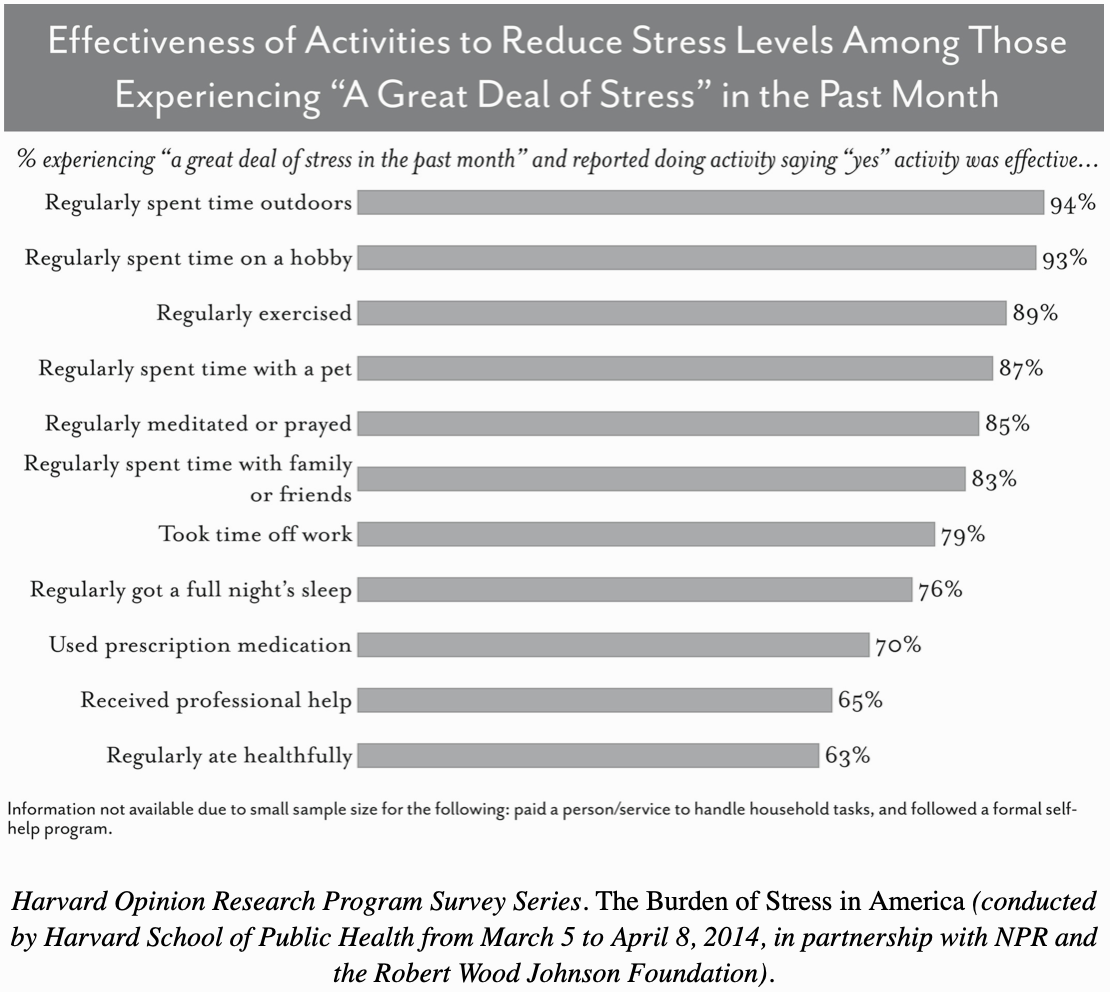
Mike and Jordana discuss a number of psychology researchers and experts throughout their conversation, including the groundbreaking work of Dr. Kristin Neff in the field of self-compassion—you can listen to our interview with Dr. Neff here. Mike also mentions a graph near the end of the episode that we have included for your reference below:
In this short episode of Status Check with Spivey, Mike offers some optimistic news for law school applicants who may not have yet received any admits.
You can listen and subscribe to Status Check with Spivey on Apple Podcasts, Spotify, Stitcher, YouTube, SoundCloud, and Google Podcasts.
In this episode, Mike gives his thoughts on whether law schools will be able to maintain their historically high LSAT/GPA medians after the 2022-2023 admissions cycle.
Spivey Consulting Availability Notes:
You can listen and subscribe to Status Check with Spivey on Apple Podcasts, Spotify, Stitcher, YouTube, SoundCloud, and Google Podcasts.
Note: You may notice that the numbers we cite sometimes vary slightly from the volume data that LSAC publishes. This is because LSAC reports only an applicant's ultimate high LSAT score, even if they didn't achieve that score until months or even years after the date in question. For example, if someone applied in 2021-2022 with a 160, then retook the LSAT the following fall and scored a 170 to reapply for 2022-2023, LSAC's data would include them as an applicant with a 170 even in the 2021-2022 data. To avoid this effect, we record applicant volume daily in real-time so that we can later compare to the data as it actually was on that date, rather than factoring in any new LSAT scores that were achieved after that date.
In this episode of Status Check with Spivey, Mike gives an update on 2022-2023 cycle data and discusses admissions strategies for the second half of the application cycle: waitlists and letters of continued interest, tips for asking for scholarship reconsideration, and handling the waiting/anxiety. (It may surprise you how impactful that last item can be to your outcomes!)
Mike recorded this episode before final January 2023 LSAT data was out—you can find the latest update on our Twitter, here. A few other Status Check episodes are mentioned in this podcast as well:
You can listen and subscribe to Status Check with Spivey on Apple Podcasts, Spotify, Stitcher, YouTube, SoundCloud, and Google Podcasts.
In this episode of Status Check with Spivey, Mike talks about the different factors that precipitate waves of law school admissions decisions being released, especially late in the cycle/during waitlist season.
You can listen and subscribe to Status Check with Spivey on Apple Podcasts, Spotify, Stitcher, YouTube, SoundCloud, and Google Podcasts.
In this short episode of Status Check with Spivey, Mike talks about the widespread notion that, even beyond whatever specific and concrete challenges we each may be facing, there is an added factor of "everything" (in today's society, in life) that can sometimes feel crushing. Then he gives some advice.
You can listen and subscribe to Status Check with Spivey on Apple Podcasts, Spotify, Stitcher, YouTube, and Google Podcasts.


