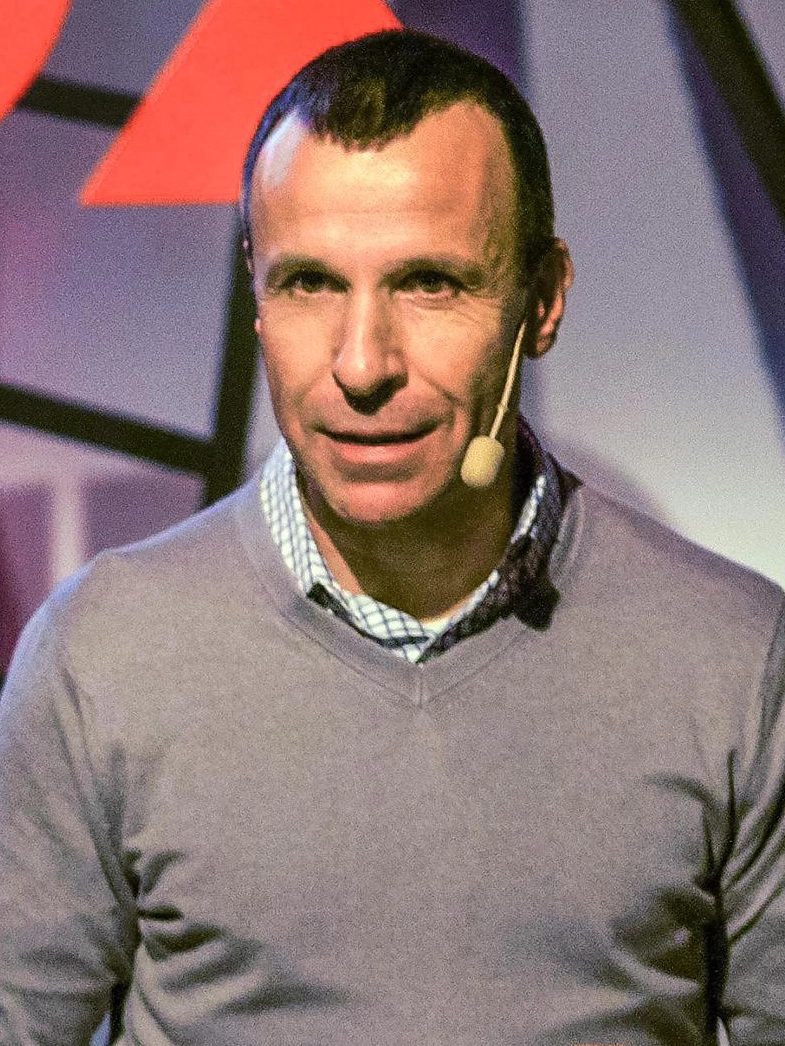
Mike: Welcome to Status Check with Spivey, where we talk about life, law school, law school admissions, a little bit of everything. We have Dr. Guy Winch, a bestselling author, a world-famous TED Talk speaker, a psychologist, and who has a new book coming out, Mind Over Grind. Perfect time to talk about two things. Stress, which builds around this time in the application process, and also balancing work/life. Dr. Winch brought up a great point. People are burnt out in the admissions process because they”ve been burnt out starting high school, applying to honors courses and colleges, and all this stays with you. He talks a good deal about rumination. What could have I done differently in the admissions process? What could I do differently in my career choices? I think this is going to help people, not just for this cycle, which it will, but as you evolve through your career. We talk about the hierarchy of law firms. We talk about a great deal. Without further delay, this is me and Dr. Guy Winch.
Dr. Winch, our very first high-profile celebrity guest and our first celebrity guest to return. Most run away. Thank you for coming back.
Dr. Guy Winch: It is a pleasure. Thanks for having me again.
[1:16] Mike: You have a new book coming out in February, Mind Over Grind. Well-timed. Is it okay to start with chapter one of your book?
Dr. Guy Winch: Yeah, sure. Let’s start with chapter one.
Mike: You have a story in chapter one, and I think it’s particularly apropos for our listeners, who are mostly going to be early in their career, about something that happened to you I think that kind of alarmed you early in your career.
Dr. Guy Winch: Yeah, and I think it’s going to be very apropos for your listeners. I got my degree, and I decided to start a private practice, and then a year in—so I’m a year into my entire career—I was getting into an elevator with a neighbor who was a doctor in an ER (that’s not that relevant), and the elevator got stuck between floors. And the guy went into a panic. I wasn’t panicked. I’m a psychologist. I know what to say to calm him down. But he was hitting all the floors, means I’m going to stop now on every floor. And he was panicking, and it was such close quarters. It was a hot day in July. And I found myself being so rude and dismissive. He was like, “This is my nightmare. This is my nightmare,” and my response was, “And this is my nightmare.”
And it was so cruel, and it was so unlike me, and he was really obviously not pleased with me at that point. But, I really had to do some—like, what is going on with me? Like, why did I do that? That was completely out of character. And I realized that I was completely burnt out. That I had nothing left to give. I was running on empty. And it was surprising to me, because I was a year in. That’s it. “You burn out 20 years in, you’ve been doing this for so long.” A year, that’s all it took.
And the realization was that it actually wasn’t about that year. It was about the six years of graduate school and postdoc that went before. And this is what I think a lot of your listeners need to understand: when you have a career track in mind and you grind it out from high school so that you can get into the right college, and then you grind it out in college so you can get into the right law school, and then you grind it out so you can get into the right firm, and you grind it out there so you become a partner. It’s never-ending. And burnout is no longer the purview of the middle-aged professional who’s been at it. We are seeing it, and I’m seeing it in really young people who are not looking for it, who are not expecting it, because, well, they’re still in school. How could they be burnt out?
Mike: I read [The Anxious Generation]. I’m curious if it’s starting with the second you can look over your parents’ shoulder and see how many likes they’re getting on Facebook. I’m curious, in this attribute-based society, if it’s happening at an early stage in high school.
[3:45] Dr. Guy Winch: I had a podcast called Dear Therapists in which we were doing live sessions with people. And it’s a great podcast by the way, because you actually get to hear live sessions. We record it live spontaneously. It’s like, this is what therapy sounds like. We don’t call it therapy because it’s for entertainment purposes, but it’s very similar. And we had an episode, I think it was called “Libby’s Stress”—something, I think the woman was called Libby, that was a fake name, obviously. She was a high school student, and she was totally burnt out. And that’s what the episode was about. She was like 16, 17, and totally burnt out. She had all the symptoms. It can start very early, because it’s about the grind. It’s about how much you’re driving yourself and what sacrifices you’re making along the way, and how you just keep doing it until something gives.
Mike: And that word “grind” is—I mean, it’s part of your book title, Mind Over Grind, it’s there for a reason—it’s so, like, glamorized in some circles. I played football. Football coaches love talking about the grind. I think a lot of our listeners—and I think this is important for me to be clear about—I get up at 3:00 AM. A lot of people know that, it made a popular podcast, and they think that’s glamorous. What they don’t know is I’ve paid my dues, I’m going to bed at 8:30. I’m getting enough sleep. I’m not doing this 1 AM til 3 AM two-hour window and working all the time. There’s nothing glamorous to me about that. There’s nothing glamorous to me, at 53, about the 18-hour biglaw workdays. Yes, people have to pay their dues. You paid your dues in residency. But I think you’re going to tell me the antidote is maybe finding some balance.
But before we get to that, you mentioned law firms, I mentioned law firms. You mention hierarchy in your book, and that’s a big part of law firms. You have this pyramid model. It’s really steep at the top, and they’re very powerful. I imagine that contributes to the early burnout, too.
[5:27] Dr. Guy Winch: Well, what contributes to the early burnout—the efforts that you need to make to get to the next milestone on the path that you’re trying to get to. And every milestone has its own challenges, right? In other words, when you are still in law school, you’re not dealing with managing partners of your law firm. And when you get to law firm, you’re probably not dealing with them either. You’re dealing with, you know, junior partners and those kinds of things. But there is a structure which dictates culture. And there is a culture that it’s supposed to be hard.
And when you talk about the romanticization of the grind, I don’t see people romanticizing the grind; I see them romanticizing—which is similar, but different—overwork. Which is a grind. But it’s like the idea of, “If you are overworking, if you are dedicating it all, if you are the last one out and the first one in, that’s the best employee you can have. There’s the model student, you know, the one who really put themselves into a grind and like, really do everything possible to succeed.” And that romanticization, we see it, we see it in the culture, we see it on social media. We see CEOs and founders talking about, you know, “I slept on the floor of my office.”
And here’s what the research shows us, and I talk about some of these studies in my book. If you look at two people who had a task to perform, and they performed it exactly the same, and then you have the actual people who we’re doing a study on evaluate: which worker is more competent, which worker would you want to hire most? And you said, here’s the task to one group, here’s the task, they did it in this time. And the other group you say, here’s the task, and they did it, but they overworked to do it. So one group of people did it in a time allotted. They were more efficient. And remember, the outcome was exactly the same. They produced the same result efficiently in the time allotted. The other group had to overwork to achieve the same result. The overworking group was consistently rated as better, more competent, a better employee. But actually, they’re not.
Mike: Yeah, the outcomes were the same. Right.
Dr. Guy Winch: Well, yeah, the outcomes were the same, but it took them longer, so they’re in fact much less efficient. The more efficient people who produce great results in the allotted time, they’re by far the better employee. It was the opposite. Our romanticization of overwork is such that, when we see it, we go, “That must be good,” as opposed to, “Why are they overworking like that? Are they actually producing something? Why are they not efficient?
Mike: Was it a double blind study?
Dr. Guy Winch: Yeah. I mean, there are all kinds of variations of it, but yeah, people didn’t know what was going on.
[7:45] Mike: So, high intensity stress today at work—you have some data in your book. Your data said it’s higher than in the last X number of years; I’m going to postulate it’s probably higher than ever. I’m curious why, at work—and obviously this grind is part of it, but it’s going to be an interconnected web of other things—I’m curious the deleterious, or what is it doing to us? And a word I’ve started using since we first interviewed you four years ago, I’m curious the antidotes.
Dr. Guy Winch: So first of all, we have 77% of the population—but by the way, there are like 1,000 surveys, I’m just using some of them, but there are all kinds of data all over the place—in one recent one, 77% of workers said that the stresses of their job were impacting their physical health. Two-thirds of employees report symptoms of burnout, which is just fundamental exhaustion of different kinds, feeling disconnected from what you’re doing, feeling numb, feeling jaded. Half the workers report high-intensity stress, so not just stress that’s ongoing. Most people will say “My job’s stressful,” but high, intense stress.
So there’s something going on in the workplace right now, where the demands on workers are growing and growing and growing. It is related to the pandemic. It is related to the blurring of boundaries between home and work. Because, you know, in the shutdowns, we worked from home. It’s not just in our own head that home became a second office. It’s in the heads of our employers and our managers. In other words, they’re much less shy about emailing us after hours, you know, expecting us to work late into the night, expecting us to respond to messages and that kind of thing. There’s some studies that show that some people do something like eight hours a week—it’s an extra workday—of unpaid time just responding to emails. And as many people say to me, like, “I only had to respond to one email. I had to read 100. And the bosses are like, ‘I only asked one question.’” You did, but there were a 100 other emails you had to look through to see you don’t have to respond to them. So that strain is very significant.
But why I wrote the book is because, as we see stress and burnout peaking—and they are at all-time highs over these past years—we’re also seeing a lot of efforts to reduce them. We’re seeing awareness go up dramatically. If you brought up the discussion in your workplace, work-life balance, 10 years ago, people would look at you like what? What are you talking about? Today, it’s a common discussion. So there’s so much more awareness on everyone’s part. There’s so many more efforts, so many more resources allocated to managing these high-intensity expectations. And yet, stress and burnout are peaking. And why I wrote the book is, the reason they are is that they’re no longer contained to the workplace.
And for students, it’s even worse, because they’re usually living at home, or they’re studying where they live. So, you know, there are very few boundaries. It’s not contained to where the work is. It’s not contained to the university, it’s not contained to the graduate school, it’s not contained to the office. We bring that stress home with us, and we allow it to impact all these areas of our lives in ways that we are unaware of, in ways that we, you know, we’re not doing on purpose.
But we are making the stress worse. We are managing the stress in ways that actually make it worse, allow it to spread, and then once it spreads, it’s kind of like, if you get home and you are really ruminating about something upsetting that happened, then you’re not going to sleep well because of it. Then you’re going to be more susceptible to stress and tension the next day, which is going to set you up to get home more irritable, it’s going to set you up to argue with your roommates or with your partner, which is going to set you up to the next day—back and forth and back and forth. That’s why it’s happening, because stress is staying in play much longer than it should, because it’s all over the place.
[11:02] Mike: To the rumination part, I think it’s page 44 of your book. You brought up, you’re not being paid for that rumination, but you’re ruminating about it.
Dr. Guy Winch: Let’s define what that is for people who don’t know. So rumination is a form of self-reflection in which we’re actually “processing,” quote-unquote, the upsetting, distressing, aggravating, annoying, insulting, whatever events of the day, but the negative ones, by replaying them. And often forms of intrusive thoughts. You know, you’re sitting at home, you’re trying to do something, and suddenly you’re remembering how this person said this thing to you that was so insulting, and you didn’t answer because it was in a public forum, but you should have answered. And what if you would’ve said that, and you know, you wish you would’ve said this, and you’re starting to compose all the different answers you could’ve said or would’ve said, and replaying that moment and getting more and more and more aggravated as you go, for a conversation you already had that you’re not going to have again. So it’s completely pointless.
So when we ruminate, we’re just replaying these upsetting events, kind of spinning in them in ways that are very unproductive. We’re not figuring anything out. We’re not coming up with action plans. We’re truly just replaying, stewing, and redoing it over and over again. But it feels like we’re doing something useful because we’re thinking about it, you know? So, oh, we’re thinking; that must be useful. No, it’s not. You are actually not coming up with anything.
And rumination is characterized by the fact that you’re activating that same emotion. You know, there’s this stress and these negative feelings. If it was insulting, then you feel insulted, and if it was aggravating, you feel aggravated. You’re just regenerating the wound, as it were. Like picking off the scab and just like re-exposing the wound over and over and over again. We can get lost in that when we’re really charged up and upset about something, concerned about something, anxious about something, and we are spending hours doing it in unproductive ways, we’re flooding our systems with cortisol, we are predisposing ourselves to have poor sleep, to eat unhealthy foods because those are our comforts, and over time, to have more risk for cardiovascular disease even.
It’s a really damaging thing, which happens to us all the time, which we spend hours on, and that we don’t realize, “No, I need to shut that off. I need to find a way to stop doing that, because it’s incredibly damaging. It’s not only not contributing, it’s hurting me.” It’s unpaid overtime if you work. Or it’s unpaid time of school where you’re just thinking about the relationships, the upsetting thing, or, “Oh, I wish I would’ve done that on the exam. I wish I would’ve said that on the exam.” People can do that too, like they’re redoing the exams, and it’s like, you did it already. You took it. You got the bad grade. What are you doing? But we all do it. And so that’s something that you need to catch and stop.
Mike: That makes sense. But also we’re learning creatures, and there’s some benefit to playing something over in our mind, particularly if the day we ran the county fair, we didn’t get paraded all over the markets. What did we do wrong? You know, I’m a big believer in, life is just a series of events. It’s one big experiment. The more experiments the better, to quote Emerson. And all you do is do a thing, reassess, and do it a little bit better the next time. Is that rumination?
[13:55] Dr. Guy Winch: No. That’s the thing. If you are actually asking yourself, what did I do wrong? What could I have done better? If the boss that insulted you, or the professor that insulted you, or the student, the coworker, whatever it is, if what you are actually thinking about is, “Well, why did it happen? Did I inadvertently step on their toes? Have they done that to anyone else? Let me think how to avoid that. Should I actually have a conversation with them? Should I address it in some way?’ You’re not ruminating. You are actually trying to figure things out. You are actually trying to learn from something. That’s a very different process.
When you’re thinking about, what can I learn from that? What can I improve next time? You are not generating feelings of angst and upset, because you’re actually in your head trying to reason your way through it. That is healthy. That’s adaptive. It’s problem-solving thinking, not ruminative thinking.
In the ruminative thinking, you keep going back to the insulting moment and replaying that and re-imagining alternatives to that, but you are not actually asking yourself a question of, “What do I need to learn from that? What do I need to take away from that? What action, if any, should I be taking? What would be the goal of that action? How do I achieve that goal in the simplest and most effective way?” etc. Those are useful, but that’s not what we do when we ruminate. We just kind of stew in the bad feeling.
And so yeah, it would be terrific if people did that. That’s not rumination. That’s useful. Because once you figure that out, “Well, how can I do better at the county fair next year?” then, actually, it eases all the emotion loadings associated with that. It eases your stress, it eases your tension and anxiety because you’ve figured it out. It’s much easier to then put things aside.
Mike: That totally makes sense, and it kind of, I think, dovetails into the antidotes. You mentioned on our other time we podcasted together, go into your application process, if you don’t get the admit, like a detective walks into a murder scene. They don’t say, “Oh no, the blood splatter,” they say, “What’s the pattern? How did it get there?” They’re objective. And it’s tough to be objective. I mean, it’s very tough to be objective with ourselves.
[15:46] Dr. Guy Winch: But it’s important. Look, here’s why. What does “objective” mean? Objective doesn’t mean well, don’t take responsibility, don’t take ownership, don’t admit your mistakes. Do take ownership. Do say, “Oh, I did that wrong.” That’s being objective. What’s not useful is, “I did that wrong. I’m such an idiot.” That addendum, “I’m such an idiot,” doesn’t serve you. That actually just demoralizes you and makes it less pleasant to keep the exploration going.
You want to develop a curiosity. Like, “Huh, that’s interesting. The boss really shut me down there. Why did they do that to me and not to other people? There were other suggestions made. Some of them were not great. What was it about mine? What was it about my relationship with the boss, or the way I phrased that, or the context, the timing in which it happened, my delivery perhaps? What was it?” If you’re getting curious, curiosity happens in our head, not in our chest. You are away from the visceral experience of the emotion. You are into your head. You are thinking. You are less emotionally activated. That’s not rumination. That’s problem solving. That’s trying to figure things out.
Mike: Yeah. What are some of the other, other than objectivity, if I’m early in my career and I’m feeling burnout because I’ve been releasing insane amounts of cortisol since high school, in this evaluative society that tells me I need to be grinding to make it, you know, I’m feeling burnt out. I’m feeling it in my body. “The body keeps the score.” Feeling like I’m on an elevator, and I can give this person the best advice on the planet. What would you have said if you had your psychologist hat?
Dr. Guy Winch: Oh, in the elevator?
Mike: Yeah. What should you have said?
Dr. Guy Winch: I would’ve said, “Hey, hey, look at me for a minute, please. I think you’re breathing a little heavily. This will be resolved very quickly, but why don’t we breathe together? Here, just follow what I’m doing. Let’s take a deep breath. Let’s first calm down. They’re aware of it because we pressed the alarm, so we’ll hear from them very, very soon. So don’t worry, I know it sounds scary, but elevators actually have safety mechanisms that prevent them from falling. So we’re not going to fall. But why don’t you do this with me? Breathe in my rhythm.” And I would like slow down the breathing and model that for him. I would calm him, I would reassure him, and I would speak in a very calm way to show him I am not activated by this, I know elevators are safe, and yada yada, yada. I mean, that’s what I would’ve done.
Mike: Okay. I even started breathing slowly when you started doing that, so that was helpful. What else, for the early career burnout people, what advice would you give them?
[17:58] Dr. Guy Winch: Here’s a question that I ask people later in their careers, but it’s a very valid one for people early in their careers and even for students, and I think especially because they’re young in life, I say to them, “If tomorrow, work went away, your professional life and all parts of it disappeared, who’s left? Who are you if you’re not a lawyer? Who are you if you’re not whatever it is that you do? What is left there in terms of who you are, in terms of what your life is about?” And it’s just a thought experiment that shows you balance—and usually the imbalance. Right? It shows you that, “Wow, I’ve dedicated everything to this.”
That girl in our podcast, Libby, again, she was 16, 17 years old. We asked her what she liked to do, and I might be distorting this because it’s been a while, but she said something akin to, “I like sitting outside watching the sunset and having ice cream.” And that sounded like a perfectly good thing to do. And then we asked her when she last did it, and it had been a very, very long time. How long does it take? How much time do you need to dedicate to sit outside for 15 minutes and have ice cream while watching the sunset? It’s a 15-minute thing. And doing it takes you away for 15 minutes, but what it also does is it resets your nervous system. It introduces calm. It centers you. It reminds you that you are doing all of this in order to enjoy the ice cream sunset. That’s the point.
And we tend to reverse the means and the end. Like, we’re doing all of this for our families, but we’re checked out whenever we are home, so what’s the point? So people younger in life, this is actually the time that, in addition to setting yourself up professionally, you need to work on what your personal identity is, on who your friendships are, on how you develop relational skills, whether it’s in friendships and romantic relationships, social skills. What are your passions? What are your interests? If you think you’re going to have more time for them later, you’re not. So need to spend part of the time doing them.
And when you work yourself to the bone, when you just grind it out without a break, you’re becoming much less effective, much less productive, you are making more mistakes. It is actually more beneficial for the end product for you to take the hour and have the quote-unquote “ice cream at the sunset,” or see your friends, or work out, and pursue the passion that you want to pursue. That will not just enrich you. It will prevent burnout, because burnout is about, all of you is geared toward this, and there’s no breaks. It’s the chronic stress, because even when you are not working, studying, preparing for exams, whatever the thing is, then you’re thinking about it, or you’re ruminating about it, or you’re stressed about it, or you are worried about it.
It’s very difficult to do that when you’re doing it all to see if you can get into that college or get into that law school, get into that grad school. “It all rides on that one thing, and let me just do everything in my power.” But to remind everyone, once you get in to the college, then you have to get into the graduate school. Then you have to get into the law school, then you have to get into the partner track, then you have to become partner, then you have to maintain the hours. It doesn’t stop. So, you can’t keep saying, “Well, I’ll make a change then.” You won’t. Make a change now because you won’t get there without feeling completely miserable. And then what is it for?
Mike: It reminds me—we went through a dopamine stage. We had Dr. Lembke, and then Dr. Lieberman who wrote the The Molecule of More, and he said something in our podcast along the lines of, the woman with a beautiful house on the oceanfront outside is working on her email and not looking at her beautiful view. She’s working on the email the entire time. And that kind of resonated with me. It is exactly what you’re talking about. You know, Buzz Aldrin went to the moon. What do you do after that? So he had to come home and find something else to do more. And for him, unfortunately, it was getting into unnatural substance, alcohol, to get more dopamine. The molecule of more is always going to say, you have to have more, and you’ve got to find a way in these intervals to shut it down a little bit because to your point, life’s going to say, “Okay, you got the job, now get the client.”
[21:52] Dr. Guy Winch: Here’s what happens to us physiologically when we are in that high activation all day, when we’re in fight or flight all day. When you are in fight or flight, your body doesn’t distinguish whether you are preparing for a battle because you have a huge exam coming up, because there’s going to be a contentious meeting in the conference room, or because you’re actually on the battlefield. It will activate you similarly, regardless of those stakes. Similarly, not obviously exactly, but similarly.
And when you are actually in battle, when we were evolving then—first of all, when we were nomadic tribes—there was a hunt. That was a discreet event, and then we could calm down. And even if they’re tribal warfare, it didn’t go on forever; there were breaks in it. And even in modern warfare, you rotate the troops from the front for R&R, because they cannot be on that level of high alert all the time.
Because remember what it does to your body. It activates your system. Your body is flooded with cortisol, your immune system goes into high gear, you stop digesting well, all your muscles are strained because they’re ready for action. That’s what fight or flight is. You are straining the system. If there is no break in that, then the wear and tear are significant, and they come soon. You’re trashing your body physiologically, and you’re trashing your mind psychologically because there’s no let-up.
You know, like any engine needs to cool down. That’s what burnout is. You’re not letting the engine cool down, and so it’s starting to just smoke up and not function because the wear and tear are starting to cause too many problems. And so you have to think of it as, like, this is how to maintain the equipment.
Mike: I think just, for our listeners, to be clear, when you say “discrete moments,” what you’re talking about is evolutionarily, we may have needed those little bursts of cortisol, but they were time-specific. But now we’re in sympathetic overdrive for much of our waking day. And, you know, I clench my teeth at night, bruxism. And I’ve been pretty hyped up, hypervigilant, however you want to word it, for much of my life. I have friends with much worse downstream health consequences than bruxism. And often they develop during the most intense stress—not relationship stress, not parental stress—work stress moments of their life.
Dr. Guy Winch: And again, this is about chronicity. You want to take care of yourself, and that means that you have to give yourself breaks from the high activation. You have to give your system time to not be in sympathetic arousal, to not have to chase the next hit of dopamine. You know what I sometimes recommend to people? I’m like, I’m prescribing an hour a week of boredom.
Mike: Yeah.
Dr. Guy Winch: Like, “How am I going to get bored?” I’m like, “Exactly.” I don’t care if you stare at a white wall for an hour, but set the clock. Be bored. You know what I mean? Because when you are bored, you’re not very highly activated. And don’t spend the hour ruminating, because that’s not boring.
[24:36] Mike: Right. A perfect segue to what I was going to ask you about—and Karen and I, who you met earlier when we chit-chatted about these devices and how they relate to burnout and stress. Let me give you an example. Karen and I talk at about 5:00 AM every morning. We start the day with a chat, because we’re both up early. So I called her at 5 AM this morning, and she texts me back, “I’ll call you back in five minutes.” There’s no need for that text. And we were both kinda laughing about it. Just call me back in five minutes.
I think there’s got to be something, because I notice it in 20-year-olds, I notice it in college students, this need for immediacy, that has been evolutionarily hijacked not in the last 300,000 years or 100 years. When I was a kid, you would call someone, and they wouldn’t call you back, and you would forget. Now, maybe it’s because I was a kid, I can’t parse that out, but my parents would come home from work. There was no email. If the boss needed them, that was once every five years, and I remembered it, because that was a scary phone call. Once every five years. Now you need a response.
Dr. Winch, they can plot an organizational chart incredibly well based on how quickly someone responds to someone else in the organization. The VP doesn’t respond as quickly to the directors, but very quickly—and this is really important for our listeners, because they want to hear from law schools, colleges, biglaw now, and it might be six months. How does immediacy, responsivity play into all of this?
Dr. Guy Winch: What it does is your expectation that I need to know now—this is about the removal of uncertainty. We really don’t like uncertainty. So if you’re applying for internships, if you’re applying for positions, you know, reach out to certain things, you want to hear from them now. And if you don’t, what we tend to fill uncertainty with is dread and negative outcomes. So not hearing means terrible things.
By the way, it’s the same thing in dating. You have a date with someone, you text them, they didn’t respond for an hour. “They don’t care.” I’m like, “They might be in a meeting. They might be doing something, they might be running outside, and they don’t have the”—and it’s not, well, they don’t care. It’s just, “They don’t care. That sucks.” You know, and they’re getting themselves really upset, and I’m like, “You don’t know that yet. Why not just say, they might be busy? Let me see how long it takes them to respond and then I’ll think about it.”
Mike: One up the scale, they might be so interested in you they’re following some game rule that they read online.
Dr. Guy Winch: 1,001 reasons. But that’s our need. Like, we need to know, and if we don’t know that it means this, then we’re upset. It’s that constant need for feedback, for the reinforcement. If we don’t get it, we’ll just imagine that it’s there in a negative form rather than actually waiting to see. And that, again, it’s all activating. It keeps us upset and activated, and many, many times completely unnecessarily.
And then, while we’re waiting, those are natural breaks. In other words, once you’ve sent it out, once you’ve put the message in the bottle and put it into the ocean, metaphorically, now you have to wait for a response. That is the time that you could be coming down from the stress, that you could be actually pivoting to the things that you enjoy, that you could take care of, your personal life or your business, or go for a nice walk, look at the view, have the ice cream and the sunset, because you’ve done yours now.
If you have a different mindset about it, then that should be the calm time, rather the time of anticipatory dread which you are creating in your own head. I really worked on myself on that one, because we’re all vulnerable to it. When I send the thing out, I’m dying to hear, “Well, what about?” I literally walk away from the desk, from the phone, from the computer, from whatever the thing is, and I literally start doing something unrelated, something that’s for me. Otherwise, I’m just looking at the clock tick. That’s torturous. When I get engaged in the thing that I’m doing, I calm down. I’m actually starting to enjoy it, but there’s a mental discipline about doing that that we need.
Mike: I can tell that you’ve worked on yourself since the last time we talked four years ago. So good for you. That’s a joke, because in my mind, you’re the most stable person on the planet.
Dr. Guy Winch: Yeah, but I have to deal with all the same issues. I’m better informed. I catch them quicker, and I know what to do. There’s my advantage. That’s the end of the advantage. Now, I still have to do it.
Mike: Have you noticed, even in your life, are all these societal hits making you catch yourself more often? Or as you get older and calmer, are you better equipped to deal with it? I’m curious.
[28:46] Dr. Guy Winch: I’m not sure you’re getting the older and calmer part. That’s not necessarily my experience, but it depends. Look, what does working on yourself mean? It means you’re trying to train your brain to respond in ways that are more adaptive and healthy, rather than the default way that is often not great. And so it’s about practice. So I’ve dealt with ruminations for a long time. I’ve trained myself well. There are periods in my life that are more challenging than others, and then I’m more vulnerable to rumination. I will have more ruminations, but I will catch them quickly. I’ll move away from them quickly. I will not indulge them. I’m well trained in that way, but I’ll have more of them to bat away than in other times.
When you write a book like Mind Over Grind, in which you’re really telling people, this is how you manage your mind in challenging scenarios and challenging situations—whether it’s at work, graduate school, law school, undergraduate, high school—this is what you need to be aware of, this is how you need to learn how to manage yourself in more productive ways, which are better for you, and on all fronts. It’s not like emotional health comes to the expense of professional advancement or professional product. You actually will have a better product; it’ll be coming from a different place. It’s an advantage all around. But when you’re writing a book like that, when I am, and I’m refreshing myself from the research, I’m sharpening my thinking about certain things, because it’s one thing to do it for myself or to suggest it to someone or the other, to actually articulate it in final form in a book. It just brings so much into awareness. And actually taking on a book is another layer of stress that you take on. So you’re reenacting it in real life because now it’s 8:00 and you’re writing a chapter about overworking and you’re like, “I really need to stop.”
Mike: A little bit ironic.
Dr. Guy Winch: I mean, it confronts you with all of it. But that is the thing, you know. And it’s very useful, because it forces me to practice what I preach. And yeah, there are times I don’t want to, and there are times I do a poor job at it because I’m human and no one can be perfect. And I’m not suggesting perfection. But I am suggesting awareness. I am suggesting a general trend toward taking much more control over these things, which I have done successfully.
Sometimes it’s uncomfortable. Sometimes I want a cheat day in which, am I allowed to ruminate just one evening, please? Now, I know that’s not good for me. I don’t indulge the rumination. But like there are other things that I’ll indulge, and I’ll give myself permission. Like, you know what, yeah, you don’t have to be the bastion of mental health every two minutes, like all the time. Give yourself evening to feel overwhelmed or to feel self-pity or whatever the thing is. But I put a time limit on it, because I know it’s not good for me. So, take an hour and then let’s get back to it.
[31:10] Mike: Does this all start with curiosity inward? I’ve seen it out in the world, and people, if you’re not willing to look in the mirror and confront some of your demons, per se—even if your demon like mine would be hyper vigilance. Maybe someone would say hypervigilance, sure, you’re revved up, but it’s not the end of the world. But like you, I’ve put in some work in myself, and I’ve gotten better in certain areas of my life that I’m proud of, but it wouldn’t have started if I wasn’t willing to say, I need to get better at it.
Dr. Guy Winch: I wouldn’t even call it demons. You’re not confronting demons; you’re confronting bad habits. Or you’re even asking if you have them and what they are. I mean, this is the thing that to me, as a psychologist, the curiosity is very natural. Like, I am curious about what makes me tick, what makes me do what I do. Where are errors in thinking or judgment, or where do I go afoul? Where am I not helping?
I’m curious about my operating system, my mental operating system, and where it’s good, where it isn’t, what I have to shore up, what I have to strengthen. If you’re not curious about yourself in that way, I mean, to me that’s a little bewildering, because why wouldn’t you be? If you can figure it out, if you can figure yourself out in that way, you can tweak. You can make the machine a better machine, a more effective one. You can make life have higher quality of living. You can make your relationships more robust. You can make yourself more resilient. You can avoid more instances of failure, because we tend to repeat patterns, and you can figure them out. You can recover from emotional wounds in a more robust way, in a quicker way, experience less emotional pain. You can thrive more, you can be more successful at work. Why would you not be curious about it?
And people are, you know, like, “Well, I just don’t know how to go about it.” Well, this is why I write that book, and this is why a lot of people write books, because they will help you. If you have the curiosity, they will help you think about yourself. And again, in my books, one of the feedbacks I get most is like, “Wow, I see myself in so many places in that book.” Good, you should. And where you don’t, ask questions about, “Well, is that like me? Or in what ways is it like me?” Because once you see yourself, then you can tweak, then you can start working on yourself. That’s what self-improvement is. It’s not just taking yourself, you know, “This is what I have, and I’m just going to keep going with that no matter what.” Why not improve? Why not make things better? You can.
[33:15] Mike: Yeah, I mean, everyone knows IQ, everyone knows EQ. There’s also a CQ. There’s a book called Aging Well, coincidentally by another Dr. Lieberman—not the same—people who are curious about the world—I don’t know how they measure it; you might—tend to live longer than people who are less curious. And it makes sense. I mean, it makes sense. So be curious about yourself.
Any final, parting thoughts for the burnt out person who, they’re feeling the effects from looking at applications and then waiting on law schools one more day? They’re at their wits’ end.
Dr. Guy Winch: Right. And so, if you are feeling that, you are already deep into the red. Take it very seriously. When you feel burnt out, it’s hard to imagine feeling any other way. Well, why wouldn’t I feel this way? I’m so tired. I’m so exhausted. It’s bone tired. It’s not something I can solve with a good night’s sleep. No, you can’t, but you need to start changing your habits now. It will get worse. The way you’re conducting yourself, the way you are going about things, is not healthy.
And you can achieve the same result, and you will achieve better results if you make some changes so that you back away from the burnout, you restore, you recover, and you learn more effective and healthier ways of moving forward. If you are burnt out and you are young, you have a whole career ahead of you. The sign is huge. It’s a banner saying, “Hey, wake up. Make some changes, or you’re going to crash, and you won’t recover from that.” And you’ll want to give up, and you’ll just want to change everything, and you’ll be like, “This is not for me.” It is for you; the way you are doing it is not for you. So change the way you are doing it. You can.
Mike: Yeah. And we only get one shot at this life, and it shouldn’t be all about work.
Dr. Guy Winch: And even if it is, a lot of it is about work, do it in a more healthy way.
Mike: Thank you. And when does the book come out?
Dr. Guy Winch: February 10.
Mike: We’ll link it in our show notes. We’ll link the first wonderful podcast. Anna Hicks-Jaco, our president, who you met before—that’s her favorite of all time.
Dr. Guy Winch: That’s very kind. Thank you.
Mike: Thank you so much, Dr. Winch.
Dr. Guy Winch: Lovely to talk to you, and thank you for anyone who’s listening.
.png)