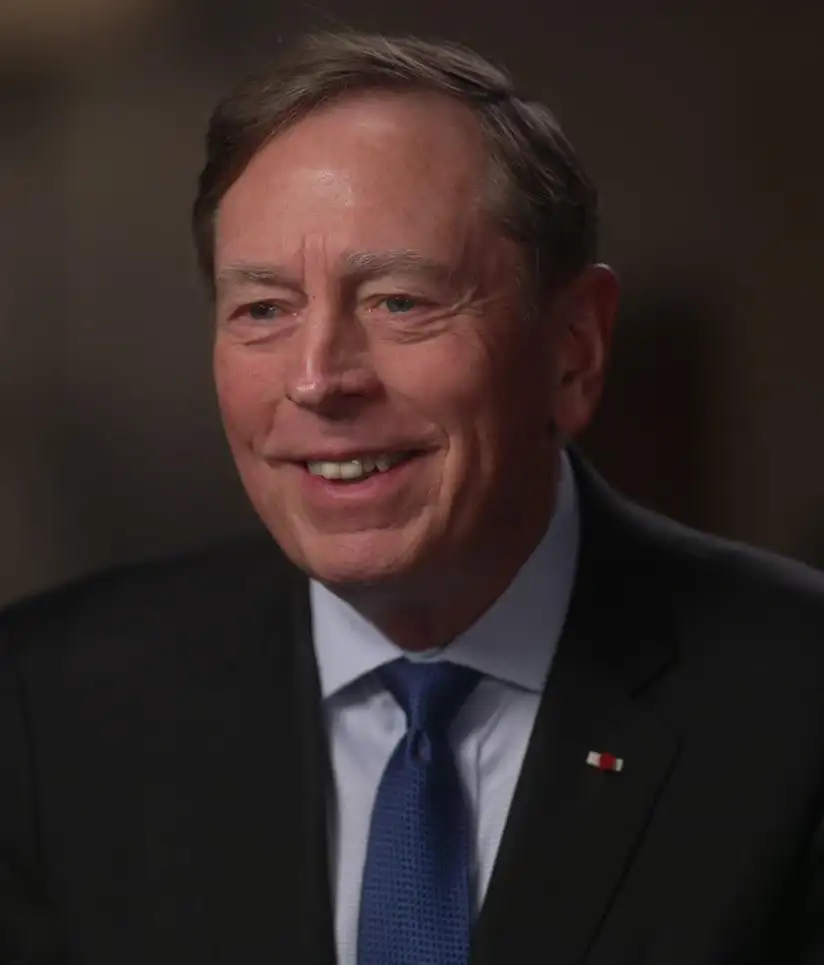
Mike: General Petraeus, it's great to have you. We know how demanding, busy your schedule is. So, thank you so much for making an hour out of your time.
General Petraeus: Good to be with you.
Mike: I'd love to start with current events. I know you've been talking a lot about current events. This one's a bit of an outlier. About three months ago, Dr. Eric Davis testified to Congress that there are four kinds of aliens. Grays, Nordics, insectoids, and reptilian. That's ridiculous. General Petraeus, everyone knows there's only three kinds of aliens. Which are your favorite? And are they in Roswell?
General Petraeus: Well, [tongue in cheek] they're definitely out there in Roswell. I mean, again, I used to visit them in area whatever it is, when I was the CIA director, to ensure that we were providing good care and feeding for them and helping to contribute to the ecosystem around them. As you know, there is actually an entire tourist ecosystem around the location out there. Again, they're the heart of it. So again, it was very important to me to ensure that they were being taken care of very well.
Strategic Leadership Construct: The Four Tasks
[Approx. 1:15] Mike: Thank you for taking good care of the insectoids. I would love to turn to leadership. Most of our audience are 18 to 26 year olds and some of them are going to—many of them are going to go on to be great leaders. You developed when you were a three-star general and you were about to go in theater to command in Iraq a construct for strategic leadership. If you want to explain to our audience what that was.
General Petraeus: Sure. So again we didn't just do the counterinsurgency field manual [in 2006] which we desperately needed several years into counterinsurgency operations. We still did not actually have that doctrinal manual. We made numerous changes to the road to war for our battalions, brigades, divisions and so forth. Overhauled the mission rehearsal exercise. But then personally I sat down and developed an intellectual construct for the exercise of strategic leadership because this is going to be the first time that I am the overall commander in a theater of war. I've been there as a two-star, as a three-star. I had a lot of latitude but when you're at the very top, it is obviously very different.
[Approx. 2:00] Task 1: Get the Big Ideas Right
General Petraeus: And there are four tasks I believe in this construct that a strategic leader has to perform and has to perform right. The first is to get the big ideas right, to craft the right strategy. In war, it means to understand the enemy, understand the nature of the conflict in which you're engaged. Understand the geographic terrain, the human terrain, the neighborhood, how the country is supposed to work, how it really works, the ethnic, sectarian, tribal, political and other elements that are there and so forth. And again, craft the right strategy, get the big ideas right.
[Approx. 2:40] Task 2: Communicate the Big Ideas
General Petraeus: You then have to communicate the big ideas throughout the breadth and depth of the organization so that everyone all the way down to the level of what we used to call the strategic sergeant and corporals [that] when they go outside the wire, they're turning big ideas in my level into concrete reality and real actions at their level doing what only they can do - by the way under body armor [and] Kevlar with weapon - and that is to engage the enemy, and, also in the kind of war we are in, counterinsurgency, to engage the people as well. You also have to communicate to America's mothers and fathers. They had a right to understand what it was that I was trying to do with their sons and daughters and how we were coming along. Obviously, the White House, Number 10 Downing Street, the Iraqi White House, again, and it's to all of our coalition forces, all of which were under command, but then to our Iraqi counterparts, to the Iraqi people. So, it's a huge task and you have to employ every single means and mechanism available to you to do that. Including, I actually developed my own counterinsurgency guidance at my level, a series of admonitions: Secure and serve the people. We can only do that by living with them. We're going back downtown gated communities, biometric ID cards. Promote reconciliation. We're actually going to try to strip away as many of the rank and file of the bad guys as we can. We're going to reconcile with them something we should have been doing from a much earlier time. Pursue the irreconcilables even more relentlessly than we were. Promote more civil military interaction and activity and all the way down to one that I particularly liked, which was, Promote initiative: in the absence of orders, figure out what they should have been and execute aggressively. But a whole several pages of this and I'd refine – it was always open as a document on my laptop which I had wherever I was. There was always a communicator with me that would be giving me the secure and then the non-secure laptops to work on.
[Approx. 4:00] Task 3: Oversee Implementation
General Petraeus: The third task is to oversee the implementation of the big ideas. This is what we normally think of as leadership. This is the energy the leader provides, [and] the example. The incentivization. It's hiring the best and brightest and hanging on to them as long as you can. It's allowing those not measuring up to move on to something else. It's the organizational architecture that you design for your undertaking. It's how you spend your time. Your battle rhythm is a crucial component of strategic leadership. And we spent a lot of time determining how I could spend my time as efficiently, effectively, and productively as was possible.
Battle Rhythm, Metrics, and Physical Well-being
[Approx. 4:45]
Mike: [Can I ask you one question about that, General?]
General Petraeus: [Sure. Absolutely.]
Mike: I think you and I may have the same sleep routine. They studied what your minimal optimal amount of sleep was and it's six hours, right?
General Petraeus: Well, six hours was absolutely the minimum. Keep in mind that you're doing this seven days a week. So, you're not sleeping in on Saturdays or Sundays. You can't sort of run yourself ragged and then recover on the weekends. So, you're at your physical limit. And for me, it was roughly six hours is the minimum. Ideally, a bit more than that. If I'd get interrupted in the night, which was fairly rare - you know, I wasn't getting called at all hours of the night. You basically made the big decisions, people below you are actually executing them. But every now and then something would not go well during one of our targeted operations or occasionally somebody from Washington would have something that was absolutely crucial and the phone would start ringing and and you could actually see on these phones point to point who it was actually calling if it was from Washington, but generally they were quite conscious of the fact that, you know, we're right at the edge of our physical existence. And we need that amount of sleep. And by the way, [an event] we had on my battle rhythm was physical fitness. Every morning I had an hour. Right when I got up -- 5:30 in the morning – was a cup of coffee would come in the door. 5:45 I'd be on a stationary bike with an intel book from the night before. 5:30 to 5:45 was a quick review of secure internet. Get in a workout of various types - aerobic and some weights and body weight and stretching. Quick shower, very quick breakfast, and you're actually in the headquarters at 7:30 for the battlefield update and analysis that starts every day of the week at 7:30 and runs an hour. And there's a schedule for what is covered during that. Some that's every day, some that's a few times a week, once a week, every other week, etc. So all of this is very, very refined. And you also have the metrics and you've got to get those metrics right. You have to actually understand what the definition of a security incident is, for example, where do you get the information, how do you deconflict it. So we brought a Rhodes Scholar PhD out from the Air Force Academy to just ratchet these down, absolutely nail the definition, ensure everybody understands that and then the chief warrant five intelligence officer would have to stand in front of me and tell me how he actually put [it all] together, because they owned these metrics. You know, how do you gather the information that is being presented to me on a daily basis? And by the way, I'm going to use this in Congress 6 months from now. And we've got to have absolute confidence in it. Do we get information just from our forces? Is it from the Iraqi press? Is it from Iraqi counterparts? Is it from diplomats? How do you then again deconflict and ensure that this is the best possible information? Because we're going to stand on this. We're actually going to live or die on this basically, because I'm going to lay it out to Congress, which is going to start at the six-month mark and we've got to have results by that point in time. So this battle rhythm is very very important [component.]
[Approx. 8:15] Task 4: Refine Big Ideas
General Petraeus: There are actually events that enable you and in some cases force you to perform the fourth task of a strategic leader which is to determine how you need to refine the big ideas, how you need to change the strategy, your approach to new big ideas, jettison old ones, refine others, tweak them as the situation evolves, as you achieve progress, success, experience setbacks, so that you can repeat the process again and again and again.
It's a really good intellectual construct. I believe there is a website, you might actually share it with those who are going to watch this. Harvard's Belfer Center where I was a fellow for six years, there was a team there of graduate students who had worked for me in the war zones, that helped to distill all this into a series of interviews that lay out these four tasks and also lay out a variety of leadership tactics, techniques, and procedures, if you will, as well.
https://www.belfercenter.org/publication/david-petraeus-strategic-leadership
The "Enemy Gets a Vote" and Importance of Strategy
[Approx. 9:00]
Mike: We'll link it on our blog with the podcast. We'll link not only that link of your construct, but also with the YouTube video [with your interview.] On number four, this is the one that's so interesting to me, the pivoting and refining. And there's two elements to it. There's the internal element. Okay, what are we doing wrong? And then there's the external element. The enemy gets a vote. And I recently read a book – you're going to be so familiar with this incident – the book was called The Siege by an author named Ben Macintyre. There was a group of ethnic minorities in Iran who were essentially being exterminated by the new Iranian regime and they took over, you'll remember, the London embassy for six days and during the book, the part that stood out to me was Prime Minister Margaret Thatcher went to the SAS commander because negotiations weren't going anywhere and two people had died, I believe. And Prime Minister Thatcher said to the SAS commander, [you know,] are you confident in your plan? And he responded, we have a great plan, Prime Minister Thatcher, but we don't know the enemy's plan.
General Petraeus: [Yeah.]
Mike: [Right.]
General Petraeus: Well, the enemy does get a vote. And again, that's what you're dealing with, and you have to understand what the enemy has done. Did they succeed or fail? Why? If so, why? And how does that result in you needing to change the big ideas? And by the way, there's, you know, you have the really big ideas again, we're going to clear, hold, build. We're not going to clear and leave. Which is what we were doing prior to the surge, which was not succeeding. Violence was escalating at a terrifying level. [There was] a full-blown Sunni/Shia civil war in Baghdad itself. So again, you have to sort out what is it that we need to do to react. You know, as you started to see suicide vest bombers, car bombers, others. You're constantly tweaking these. And again, you have the really big ideas, but there's lots of other ideas that are part of this as well. And that's the leader's job. But the most important task is to get the absolute big ideas right. Because if you don't, it doesn't matter how great your communication skills are, what kind of inspiration or speaker you are, you know, 6'2” with a great jutting jaw, none of that actually matters. And the irony is we had some people that seemed to be exceptional commanding in Vietnam, but we failed to get the big ideas right for 13 years from the mid-1950s until late 1960s. When we finally realized we could not win a war of attrition with North Vietnam, the big unit war, we'd kill 10 of them for every one of us. Or at least that's what the body count said, although that was called into question over time. But we should have been focusing from the very beginning on security of the people in the hamlets, villages, districts, and out in the provinces rather than chasing all over in the jungle and highlands and everything else. That doesn't mean you don't have components of that, [etc.] But that should have been the focus. We didn't get that right until late 1968, and by that time the Tet Offensive had already discredited the strategy. The light at the end of the tunnel did not appear to be there anymore, etc, etc. It took us, I'd argue, seven years to get the big ideas right in Afghanistan. It wasn't until General McChrystal took over that we actually had the kind of approach that was necessary – again, a comprehensive civil military counterinsurgency campaign. And then it took another year to get the inputs right to actually enable us to carry it out. And then, unfortunately, we began drawing down from that within 6 months of actually finally getting the inputs right. By then I was the commander on the ground. And then, over time, unfortunately what determined the pace of the drawdown ended up being much more conditions in Washington than conditions on the ground in Afghanistan, which is what it should have been. So, anyway, getting the big ideas right is absolutely the be all and end all. And then keeping them right.
Remember Kodak, which had phenomenal big ideas on film photography and services, was the king of all of that, [and] had 2,000 patents on digital photography and failed to make that the new big idea fast enough. Others got there [first, and] they've never ever returned to the kind of prominence that they had back in film photography days.
Or you look at Netflix, un-erring, Reed Hastings in big idea after big idea. First big idea: put movies in the hands of customers without brick and mortar. Undercut Blockbuster, they go out of business. Now he notes change. Broadband speeds are much faster. Situation has changed. So we need to change the big ideas. People can download movies. Now we're going to make our own content. Hundred million dollars on House of Cards and all these other iconic series. And then we're going to make major motion pictures. And we buy two movie studios, not one. Then earn more Academy Award nominations four years ago than any other major movie studio.
Realistic Military/CIA Movies & Novels
[Approx. 15:45]
Mike: [So,] two followup questions that come to mind.
General Petraeus: Yeah.
Mike: Number one will be a lot quicker and a lot more light-hearted. Do you have a favorite military or CIA movie that's realistic?
General Petraeus: I have novels that are realistic. But certainly [you know] what Tom Cruise does in the movies bears sort of no resemblance to [real operations.] The communication always works. [He's all - and again -] he's central to every single thing that's going on. The director is watching intently the whole time telling him to go left, go right. Again, this is completely nonsensical.
Mike: 100% get that. What about like Zero Dark Thirty? Any realism in the movie?
General Petraeus: There was realism there. Although the key female lead was a composite of several women, not just one. [Um,] but again, I know that was well grounded in reality. But I'd look at the novels of say, David Ignatius. Also there's a great one which is about the situation in Syria, Damascus Station, which I think is the best spy novel of all time and written by someone who worked for me back when I was the director, in fact, was involved with Task Force Syria.
Why Big Ideas Go Wrong: Lessons of the Past
[Approx. 17:30]
Mike: [So when you were at the CIA this person worked for you and then they wrote the book.]
We'll put a link on our blog.
https://www.amazon.com/Damascus-Station-Novel-David-McCloskey/dp/0393881040
The more serious question would be these brilliant people, they get the big idea wrong. It's always intrigued me and I've studied it too. I recently read Donald Rumsfeld’s biography. I read a number of books on Waco and Vietnam. And I'm not implying anyone I've just named got a big idea wrong, but were you able to crystallize and refine what was it that obfuscated [their view,] their global view so that they were going in the wrong direction for 13 years in Vietnam?
General Petraeus: Well, there's a number of factors typically. One can be that you have lessons of the past that you learned yourself, if you will. So for years, the lessons of Vietnam haunted those who were the junior officers of that war as they became the senior leaders - and I sometimes felt overly much. There's a whole body of literature on decision-making during a crisis. And one of the elements that emerges in that is that experiences you personally had that were very visceral and powerful tend to influence you arguably too much. Especially when you're doing crisis decision-making, which is, again, you have to make rapid decisions. You have imperfect information. People are calling on you. We got to make a call. And there's a tendency to fall back on what it is that you experienced, what you learned from that, whether it was the right lesson or not. In fact, my PhD dissertation at Princeton was, “The American military and the Lessons of Vietnam.” And I chose that specifically. I chose that subject because I wanted to understand our experience in Vietnam. What seemed to be the lessons - at least the lessons that people had taken. Were they the right lessons? And so, I mean, one of the lessons was we don't ever want to again be engaged in counterinsurgency operations. So, let's not study it. Let's not configure our forces for it. [And] but, you know, you don't get to pick the wars that you fight. The President does that. And we ended up engaged in two major counterinsurgency operations [in Iraq and Afghanistan] and as I mentioned earlier, we didn't even have a doctrinal field manual, much less any discussion of this subject of a serious nature in our staff college, war college, the basic and advanced courses for our commission, non-commission, warrant officer leaders. I think one of the books that captures this particularly effectively - The Best and the Brightest by David Halberstam - is about this extraordinary group of people that came into office with President Kennedy. All brilliant. [You know] the brahmins: they’re Harvard, they’re Yale, they're all the Ivy League schools. And, again, some of them just complete outliers in terms of their academic achievements. And yet that was the group that got us into Vietnam, [pursued the wrong or] allowed the wrong strategy to be pursued by those in the field, who claimed that they were well aware of counterinsurgency. And there were, to be fair, certain [correct] initiatives like the strategic hamlet initiative and others that were pursued at various times but they were never the main effort. The main effort became the big war and that's where the promotions were to be had. That's where the medals were. All of this and that means big units, First cavalry division, 101st Airborne Division, 25th [ID,] all these units that were in there conducting search and destroy operations and so forth, which again were not correct. We could not win that war. And it wasn't until late 1968 that you had General Abrams come in - who didn't look the part necessarily, [who] sort of rumpled. He had a cigar in his mouth. He's an old tanker, not an airborne infantryman and all the rest of that. And he actually recognizes that we have a need to pull it all together. We need to focus on the security of the people where they actually live. And we need to work together with the elements of AID and the CIA and all these others, everybody together. But by then it was too late. The Tet Offensive had happened. It had discredited the entire apparatus running the war from the White House all the way to the leadership in Saigon. And you could not sustain that effort [at home] at that point in time.
Mike: And as a side note from Abrams, we get the Abrams tank name, correct? From General Abrams.
General Petraeus: We do. Of course, he was a heroic tank battalion commander in World War II. In fact, he was the unit that spearheaded Patton's turn on a dime to get to Bastogne and rescue the embattled 101st Airborne Division. Battling Bastards of Bastogne, as then called themselves, who were encircled by the Germans who had just conducted what turned out to be their last real significant offensive and this was the Battle of the Bulge.
Leadership Styles and Development
[Approx. 23:00]
Mike: [Okay. So,] and then so shifting from people like you later in your career, or General Abrams late in his career to early in your career, you know, leadership styles. There's this notion that people aren't born leaders. And I can't stand that. And I'm curious [for] your thought. And I'll give you an example. I'm shy by nature. I was a very shy child. When I was in junior high, a group of my classmates were walking towards me and I would have to say hi to them. So rather than saying hi, I jumped into a bush and hid [so I wouldn't have to.]
General Petraeus: [That's a bit extreme.]
Mike: [Yeah. And you know, I would say not as extreme as feeding insectoids, but I would agree. Um] but [I] I, you know, I looked at people out in the world and I [said you know I want to] set these goals and then I became a three-sport um captain in high school, and higher education, legal education leader. [Some might argue not so much, um,] then became a leader in the business world, some might argue not so much, so I don't think I was born a leader. I think I watched the world and saw leaders like you and others and let them feed me and become a leader. So one, is that the case, or in how to do so. And two, more importantly, because you've talked about this and I think of my football coaches, [is] sometimes there's different leadership styles. Sometimes you need to be focused on negative reinforcement or positive reinforcement. So how does one become a leader? How does one develop different leadership styles?
General Petraeus: Well first of all just to start with styles. My view is that leaders should not have just one hard and fast style. People would ask me, you know, as you get more and more successful, everyone wants to ask you. So General, how would you describe your leadership style? And I think, you know, they think I'm going to say, “Firm but fair,” or I don't know, “I'm a micromanager,” or, “I'm a hands off,” or whatever it may be. Actually, the style that you employ should be what will bring out the best in each of your direct reports. And they're all different. Some of them need a pat on the back once a year and they're good to go. Some need a pat on the back once an hour. Some need you looking right over their shoulder. But it depends. And then for the [different] elements of your organization - first of all collectively, the entire organization, but then there are different elements within [the organization.] You know, you look at the CIA for example – the analysts are very different, very cerebral, very academic, have great academic credentials expertise, etc, than say the operators if you will – the human intelligence collection officers, the spies, really the clandestine service officers and so forth. Again, they're all incredible. It's the most extraordinary workforce in the world, but they're different and one is a bit more action-oriented, the other is a bit more cerebral. So, how do you bring out the best in each of these? Well, I put my professor hat on talking to the analysts. On the operators, I put on my hat as a, you know, battlefield commander, having served with a number of the station chiefs in places like Baghdad [and Kabul,] and then throughout the US Central Command area and all the rest of that – starting in Bosnia, actually, when we were all chasing war criminals and then terrorists together after 9/11. So, first and foremost, the only way you can answer what is your leadership style, is to ask what will be required in a leadership style to bring out the best in him/her, the organization overall, the elements of the organization, etc. And that's what you should try to provide as a style. You know, obviously the style that brings out the best in a romping, stomping airborne infantry platoon, which I was privileged to lead as a young second lieutenant, it's a very different style from leading a multinational coalition. And it actually changes as you go up. [You know, the first time that you all of a sudden have women in the force or you have aviators. Now you have, you know, we used to joke about aviators. You're now doing ego management. Um, but all of this, the first time you have special operations forces, then special mission units, and again they're all somewhat different.] You have to understand what makes them tick and provide that style of leadership.
Developing Oneself as a Leader
[Approx. 28:00]
General Petraeus: When it comes to the development of leaders, I think there are characteristics, qualities, attributes etc that we are given in our DNA. And the question is how do you make the most of what it is that you have been given? You always run into limits in athletics. [You know, at a certain point,] look, I realized when I went from high school soccer (we won the championship my senior year and I was an all-star), [but] all of a sudden in college, I realize I can't go around the corner with the ball on these backs, these fullbacks. And so forth, that they are so fast in college that they're actually keeping up with me. That's a limiting factor. You have to recognize, again, you have so much God-given speed. That doesn't mean you can't make the most of what it is you're given, but you, there are some limits.
I think it's probably the same case with leadership except that I think you can do much much more to develop yourself and you develop yourself physically, mentally, intellectually, [through] experiences that you seek. I always sought out of my intellectual comfort zone experiences from the very beginning. If all the infantry officers are going to the infantry advanced course, I want to go to the armor officer advanced course. And I did the infantry one by correspondence, so they couldn't send me to it. I wanted a different experience. I went to Princeton for graduate school. I was told I was committing professional suicide instead of going to the Ranger Regiment, which is where I'd intended to go.
[The staff college got in the middle of that unexpectedly, but] you know, I went [to grad school] because my boss at the time, General Jack Galvin, who was a two-star, then he was later Supreme Allied Commander Europe, and I worked for him two more times, including when he was the SACEUR. He said, "Have you ever considered raising your intellectual sights higher than the maximum effective range of an M60 machine gun?" [“I got it.” I think I get the message.] Um, you know, that's the maximum range organic system in an infantry company at that time, unless you count the mortars. You know why do I care about anything beyond that – that's the artillery's job or the Air Force or the, you know, you name it. But I got the point he was making, and that was a real out of my intellectual comfort zone experience. [And it was!] I found out there's people in the world that don't see it remotely through the same prism that I do and have serious differences based on all the way back to the basic assumptions of what's called the state of nature You know, in the absence of the Leviathan the overarching power, would the state of nature be everyone hugging each other or would it be everyone fighting each other in which life would be nasty, brutish and short, to quote from [Hobbs’] Leviathan. So this is really pretty important.
I [also] sought experiences, opportunities, assignments that would also provide vantage points. So I was the Aide to the Chief of Staff of the Army. And also his assistant executive officer. I was the one who traveled with him everywhere he went, not the XO. During the Panama invasion, the response to the San Francisco earthquake, which was led by the Army of all things in those days, and then the Gulf, Operations [Desert] Shield and Desert Storm. Years later, I was the executive of the chairman of the Joint Chiefs of Staff for two years. You know, our senior military adviser to the President and the Secretary of Defense and the senior military overall. I was the speech writer for the Supreme Allied Commander of Europe. These are incredible experiences because you're at the right hand of very very senior individuals who are exercising strategic leadership, performing those four tasks I discussed earlier. And to see that, to be with them, to be behind them, look over their shoulder, what have you, while they're testifying or meeting or whatever, this is really really very helpful and you develop big ideas about certain aspects of your profession. Again, why did I do a PhD dissertation on the American military and the lessons of Vietnam? I wanted to understand what was the character of military advice prior to Vietnam, what was it during Vietnam, what was that experience for those who experienced it?
[Approx. 34:00] And then [they] went on to senior leadership positions, how did it shape their advice? And I actually developed an idea that, you know, when if I'm ever in a senior position, where I'm being asked for military advice, say on a draw down, which is the toughest of all. I told two presidents this, I said, "Mr. President, [now, okay, I] the only answer to the question you've just asked [to command forces in Iraq or Afghanistan] is “yes, I will be honored to be nominated for that position. But I want you to understand who you're getting here." And among the issues that I would raise would be that when it comes to the drawdown. The advice I provide will be based on the missions you've given us and all the tasks and purposes involved in that. The facts on the ground, our forces, enemy forces, etc. and the situations there. Can we draw down without jeopardizing the ability to continue to perform the mission successfully? Informed by an awareness that you have a lot of other issues that actually could lead you to disregard my advice or not heed all of it, not approve all of it. Look, you have to get reelected. You have congressional politics, you have budget deficits, you have strain on the force, you have an opportunity cost. If you keep forces in Afghanistan, you can't send them to the Indo-Pacific. All of these different elements that are factors in his decision-making that I understand, but my advice is driven by facts on the ground. And that was particularly powerful in the final case of this when I was advising the Obama administration on the drawdown in Afghanistan at the end of my year in command of the forces there. And I did not change my advice from the first meeting to the third meeting even though it was clear that the President was not going to take it in full. And then I explained to the Senate the next day in my confirmation for the CIA director that because the very first question from the Republicans trying to make points against the President was that he had not approved my recommendation. I said that his decision was a more aggressive draw down than I recommended. But he's the commander-in-chief. We'll follow that order obviously. We'll do the very best we can with the resources that we're given. But again, yes, it's a more aggressive formulation of the drawdown than what I recommended.” And then okay that's it. He [the President] listened, he went through it and I had my say, and he made the decision. And you know if they wanted I could get into why it is that he might actually not agree or not may not approve what it is that I recommended.
Unfortunately then over time, again, as I mentioned, the draw down overtime became based less on conditions on the ground in Afghanistan and more unfortunately on conditions in Washington, and that's not the way it actually should be.
But you get the idea here that I tried to have experiences, assignments, education, and then actually doing it myself and constantly trying to learn. In the counterinsurgency field manual, we make the point in fact that we should oversee learning organizations and we need elements, events in our battle rhythm that actually force that and enable it. So every time the two stars got together, every one of the division commanders had to give one initiative that he or she was pursuing that might be relevant to the others, and also one lesson learned. So you're constantly working this. I would meet with the center for lessons learned leaders [there of the] Army, Marine, special ops, asymmetric warfare group, counterinsurgency center. All of these individuals in a process that would filter up to an hour with me once a month. And just many of these different activities and events to facilitate learning. And then I surrounded myself with some individuals who were willing to say, "I disagree, boss." In fact, one of them had been thrown out of Iraq early on because as a full Colonel intelligence Officer, he said, "Excuse me, but we're facing an insurgency here." And the leader in the Pentagon didn't like that and they said, "Send him back to the United States." I brought him back with me.
H.R. McMaster, [who we] have often said, "never [leaves] something left unsaid." Which is great. That's what you want. And he was up at the International Institute for Strategic Studies in London after a very successful battlefield command as a full Colonel. I said, "Bring him down to Iraq. He can do study after study for me." [And brilliantly, together always with an ambassador. And he inevitably would identify major issues.] You know, the ambassador and I had been there for a while now. We thought we pretty much understood this. I've been there for three years at that point in time. Ultimately did four total. And still there would be one of these moments when he'd lay something out and he'd say, "Hey boss, I don't think you actually recognize how significant the Iranian influence is on the Shia militia” or something. You know, this kind of thing. These are big deals. These shape big ideas. So again, as a leader, you don't want to be surrounded by sycophants. We don't want to be surrounded by people telling you how great you are. Or whatever. You want to be surrounded by people who will tell the emperor that he doesn't have clothes on, intellectually speaking.
Confirmation and Dissent
[Approx. 39:30]
Mike: Yeah. Our number two at our firm, our president, Anna Hicks-Jaco, she probably disagrees with me 51% of the time. And that's the best thing that we could possibly have. Every morning we have a 6 a.m. phone call. Every morning Karen and I have a 5 a.m. phone call. And the disagreements are much better than the “I think you're on track, Mike.” [So I can,] I want to paint a visualization for our listeners. So, literally you're going, day one, you're in the Oval Office speaking with President Obama and then the next day you're in the Capitol testifying in front or or being confirmed in front of the Senate 94 to nothing, by the way, which I don't see for a while.
General Petraeus: Actually, CIA was 94 to nothing. The Afghanistan [vote,] there was one, the senior Senator from West Virginia, often likes to cast a dissenting vote. So I think my confirmations for the Surge, Centcom, and Afghanistan were usually 93 to 1[, or on that order.]
Mike: Who was it? [On the podcast] Senator Bird and.
General Petraeus: Okay, we're gonna ask them why they voted? Well, it'd be hard to do because he's, he's obviously, sadly, no longer with us. But he wanted to be engaged more. I understood that. It was just very difficult. You're running a war. You're doing this or that. And I couldn't always engage with him the way that he wanted to. He was a Senate Armed Services Committee member, but I don't think he attended hearings. Anyway, that was the one. But for CIA, it was 94 to zero or 93 to zero, and that's somewhat rare these days, shall we say.
Overcoming Challenges: Imposter Syndrome & Preparation
[Approx. 41:45]
Mike: I don't think we'll see it again [for a long,] for a long time. Was there any point in your career – because I felt it in my late 20s when I was hired as a dean-level employee for law school and I was young and hadn't led before – that you felt either overwhelmed or impostor syndrome? Or anything where you know, and it went away for me of course after a year or two, but it was coming too hard too fast and then how did – for our listeners who are going to be leaders and leaders very early in their career, we have many many listeners who will clerk for the Supreme Court, go on to be CEOs [or presidents CEOs] of companies have is there any point where you felt like you were in over your head or it was overwhelming?
General Petraeus: I, I'm not so sure I'd actually say that. This doesn't mean I wasn't working incredibly hard. You know you don't get some of the achievements without really truly. And by the way, there will be people that will say, and have said, [you know] Petraeus is lucky. I was lucky at certain points in terms of timing or this or that, but luck is actually what happens when preparation meets opportunity. And I worked very, very hard to prepare for what ultimately happened, which was commanding two wars and a theater of war and then directing the CIA, and so forth but also for all the events along the way.
I remember when I was getting ready for Ranger school I just didn't ruck march endlessly, but I would [max] the physical fitness test. I would do the Ranger PT test back to back to back so that I was sur, and to the highest level so we get you know 100 points in each [event,] so that there would not a circumstance where there's a ranger grader who's tough on push-ups. I mean, I want to be able to do twice as many push-ups as I have to if that's necessary. I want to be able to run so fast that there's no question that I'm going to be able to meet the standard. And I'm talking the very top standard. And you're prepared in every way you can. You're prepared intellectually, [as well.] I studied the orders process and memorized all of this information. [Approx. 44:00] had really understood [you know] I don't ever want to have to do laundry during Ranger school [, but the people that only brought the required number of uniforms ended up doing so,] because you go through mud every morning in the first phase of the operation. You're literally crawling under barbed wire and mud. You cannot wear that uniform again the next day. They want you to be in a clean uniform. And so, I brought something like four times the number of uniforms was required. I just bought these old uniforms. They don't have any patches on them or anything in Ranger school. And everybody else is lining up for the limited number of washers and broken dryers and I'm going out to my car pulling six more [uniforms] out. You have to get really serious.
You know, I'm often asked, what's your general advice for young people? Number one is recognize that life is a competitive endeavor. You actually don't get a trophy or a t-shirt just for showing up in the real world. You get it for excellence. But what you want to do is not only be the best you can be - and the best overall if that's possible. You want to be the best team player at the same time. I got all three awards in Ranger School, and one of them was for partly being the best Ranger buddy you could be. So I wasn't just the best overall, [again. But] you don't want to get the best overall having your fellow Rangers students thinking that you crawled over their backs to do it.
[Approx. 45:30] Mike: One of the things you're clicking on is I call it narrowing the goalpost. You'll get that expression having done the coin toss at the Super Bowl. But I mean even for this conversation, we try to [make conditions,] set conditions much more difficult than they could possibly be so that we never have to be overwhelmed when impossible. We tell the market of our listeners, if you're going to go take the SAT, take the LSAT, do a couple tests with 10 less minutes than the real test [because then when you do the real. It's no different than your Ranger school PT training. When you do the real test, it's going to seem a lot shorter than if you narrow the goalpost.]
General Petraeus: [No,] absolutely. You obviously want to do that. You want to train to a higher standard than the absolute excellent standard. All of that, it's all about preparing for that individual endeavor, but then also preparing overall as well. So there's also reading going on. There's also again formal education. Look, I was sent to Princeton to get a master's degree. That's what you have to do to teach at West Point. I was going to teach international relations and economics. And I decided, Look, I got two years here. If I really load up [on] extra courses and create some of my own, and actually design courses for reading, directed reading they're called, with specific professors, to prepare me for the PhD exams. I can do not just the master's degree and those general exams and the thesis and so forth, but I can actually knock out all the [Ph.D.] course requirements, all the general exams, the language exam, and the dissertation prospectus and defense of it, [uh,] in two years. And now that one may have been one where I started to feel a tiny bit overwhelmed.
[Approx. 47:00] Mike: There we go. I knew it.
General Petraeus: [But] What you do is, you say, "Okay, I got to figure out how am I going to do all these things." [Um, and we] also had a young baby. Um, so that was a challenge, but again, you just figure [it] out in a very very rigorous way. And there's no screwing around then. You're not partying. You're not having beers at night with your buddies. Again, I was married anyway, but I was still working out, still training and the rest of that, but you've really got to be very, very rigorous and disciplined in the use of your time and you got to, you have to understand the [Ph.D.] rule book. By the way, I understood it better than they did because, we had a course conflict and but I found a rule that if you got an A-minus in a course final exam, you got credit for it even if you never set foot in the room. That was by the way advanced macroeconomics, which is all manipulation of matrices, calculus, etc. that I hadn't used in years. But, you know, I worked really, really hard. Got all the lecture notes, went through them and rolled the dice on the final exam and got an A-minus. So you got to really work your way through this and I thought it was doable and it turned out that it was. And then I was able to go to West Point and finish the dissertation while I was up there teaching.
[Approx. 48:45] Mike: So, our listeners are going to really click in on, [to] hone in on this part. You got an A minus. Princeton, how old were you at the time?
General Petraeus: [Uh] 28, 29.
Mike: The typical person would feel with a baby would feel overwhelmed. You're probably feeling a little bit of pressure, but [you're what, you're say,] what your mind is saying is problem solve. Problem solve. I got an A minus, but the school doesn't want to give me this grade. And you knew the manual better than in the school. [So, you were,] you were able to go and present?
General Petraeus: Well, I went to them ahead of time and I said, "Look, I've read the requirement that if you get an A minus or better in a final exam, you get credit for a course." They didn't understand that I only had two years. They just, [it] didn't factor in. They only had one Army student at a time typically in a year group. They limited it actually. And I went to them and said, "You just don't understand. I can't say I'd like two more years. You know, they said you should take two years to do the masters, two years to do the PhD coursework and general exams, two to four years to do the dissertation. And I said, I only have two years. It took an enormous amount of overload, specially designed courses, all of these tactics, techniques, and procedures to get through all of that stuff. And it had never been done before. and it never has been done since. I should also note, gosh, I got a D in my first microeconomic [exam.] I'd had no economic background at West Point. In those days, you didn't have the general economic course that you now have, which I later taught. I was in a premed program, which was very, very competitive because there were only eight students in our class that were going [to go,] out of about 850 or so uh graduates, down from about 1,400 that started. So it's 1% of the class could actually go to medical school. I loved the subject matter. I love chemistry, organic chemistry, human bio, all this, but all of a sudden I actually got a slot. So I was something like four or five in the program because it just keeps winnowing down. And you're in the end of it, your senior year, you're all in the same class basically. And so I could count over, because you sat by your rank. . And so all of a sudden we resectioned and I'm sitting and I count over and I'm going to be again number four or five in the program. And that was when I recognized I loved the academic challenge of it. This is the highest peak to climb, but I actually don't want to be a doctor. So I just went infantry and declined to go to medical school. The problem with that was when I went to Princeton for graduate school and you had to do advanced micro and advanced macro for the PhD. Otherwise, you just did basic. I was wholly unprepared. I didn't even know that a supply curve went up and the demand curve went down. I mean, that's the level of my, uh, economics shortcoming. And so, I had Paul Krugman's Econ 101 book that I'm literally, you know, one chapter ahead of where we are in the course. And, I ended up again with I think an A in the final exam [on micro.] So, it's always about how do you come back from this?
Look, the individual who turned out to be my dissertation advisor, Professor Richard Ullman, Dick Ullman, who is a Harvard [grad,] Rhodes Scholar, PhD in Oxford under George Kennan when I think he was, teaching there. He wrote on my first paper, “This has many good features, but I fear that the whole is somehow less than the sum of the parts.” Whoa.
[Approx. 52:30]
General Petraeus: So I went to see him and I said, "Look, I'd like to show you that I can do better than that. And instead of the final exam, I'd like to do a paper.” And that paper ended up being the kernel of what became my dissertation, with him as my senior dissertation adviser and a wonderful, wonderful guy. And, again, he kept me on the rolls for two years while I was assigned to West Point. Uh, and Princeton didn't charge me for tuition, which they could have done. I've seen that happen at some other schools and that would have broken the bank. I was a captain on a government salary. I've been truly indebted and grateful, to that great university ever since and have done an awful lot of things for them since then.
Qualities of a Leader: Perfectionism, Work Ethic, Excellence
[Approx. 54:00]
Mike: The last time I spoke there, you're not going to know the answer to this, I bet, based on your schedule. There's a bar called the Barrister and the Alchemist that was started by a law professor and a chemistry professor. I don't know if you ever got to go have a beer after a class.
General Petraeus: Is it the one where my picture is there as a...
Mike: I don't know.
General Petraeus: There are, there are pictures of…I don't know who's on the wall or what you do to get on the wall, but I'm on the wall and it's a picture of me when I was that age.
Mike: Right. We'll find it. We know the pre-law advisor. We'll, we'll find it when I speak there next. I think your picture probably on a lot of walls…
General Petraeus: I think it's at the Nassau Inn, [but whatever. The bar there, too.]
Mike [Is there a way to distill? So, I,] I almost feel like I'm talking to three people. You're, you're doing these med school courses, you're doing macroeconomics, you're going to ranger school, you're, you're scoring highest in the PT. Is there a way to distill all this down into: are you a perfectionist? [Are you] - is it work ethic? Is it a combination of a few things? You're obviously incredibly accomplished, more so than um obviously I, I'll ever be, but what can I learn from this as a listener or myself?
General Petraeus: You know, you try to be the very very best you can be in those areas that really matter to your profession. Starting with West Point, there are three elements that are really important. One obviously is academic. So that's the intellectual realm. Uh another is physical and the whole physical fitness and I was on the soccer team and also the ski team. In fact, our ski team won our division every year, which was New York, and then we went to the Eastern Collegiate Championships, which was a real thrill because there you'd see all the World Cup racers who would come home to University of Vermont, New Hampshire, and, and Middlebury from [Europe] where they were spending their winter semester. But in those days, it was true amateurs, no professionals, and they all wanted to go to the national, collegiate athletic championships and be all Americans in addition to being on the national team. So that so you have the physical component, the intellectual component, and then you have leadership. And I think there was only one other person in the class who was a star man, it's called, - top 5% of the class academically, varsity letterman, and a cadet captain (and I was on the brigade staff, the assistant adjutant), so you have clear areas and the Army values those three [areas] as well. They want people that are reasonably switched on, whose, intellectual elevator goes to the top floor most of the time. They want people that have the physical fitness that is required, to have stamina and be able to perform under really stressful conditions. [Um,] you know, six hours of sleep a night, the minimum. [Uh,] can you do that over a long period of time? That kind of thing. And then they also want the leadership attributes - the skills, knowledge, expertise, experience, etc. that can enable somebody to perform the four tasks of all leaders, because every leader does perform these four tasks. The difference is that the leader at the very top has the most important task of all which is to determine the overall strategy, the overall big ideas. But everyone below that leader has to turn those into big ideas at his or her level. The problem is, of course, if the leader at the top gets the strategy wrong, you're sort of stuck with that all the way down. You might actually even think that this is the wrong way. There were people during months leading up to the Surge who said, "Excuse me, we're not achieving enduring results here. The Iraqi security forces can no longer hold what it is that we have cleared. We should go back downtown. We're going to have to [do so.]" And actually those gears were set into motion before we actually started the Surge. But, but again, you, if you're not at the very top, you don't necessarily have the liberty to do what it is you, [you'd like to do or] think you should be doing. You generally are going to be confined by the decisions made at the very top.
Handling Mistakes and Taking Responsibility
[Approx. 59:00]
Mike: What have you done in the few times that you haven't been the very best? [How did…]
General Petraeus: [Just] Try to do better the next time.
Mike: [Okay.]
General Petraeus: You screw things up. You make mistakes. I made big personal mistakes. Um, our units made mistakes. We had a non-commissioned officer use pages of the Quran for target practice. Every one of our combat outposts, bases, everything, you always have a 25-meter range, and you're constantly re-zeroing your rifle so that the sights, actually show where the round is going to go. There's a process for this. Usually use concentric circles and so forth. You do the same thing when you use different optics. A close combat optic, a night sight, whatever it might be. So, this is about being really professional. Making sure that where you aim is where the bullet is going to go. And that's not axiomatic, by the way. It's not set up. You have to make it that way. Well, anyway, this individual decided to use pages of the Quran. And a host nation worker, we had a lot of locals helping us on our bases with a lot of the recurring tasks that didn't require somebody in uniform. This ends up in the trash. He's taking the trash out and he sees this and the next thing you know, within an hour or two, I'm apologizing to the prime minister of the country. President Bush calls him and publicly apologizes. These things happen. There are mistakes made. Uh, there are huge errors. Abu Ghraib was, you know, that's indelible. That there's no half-life to those images from the Abu Ghraib detention facility and the way the detainees were treated. Those images again are absolutely indelible. [So] when stuff happens, when you make a mistake or the organization makes a mistake or what have you, you [have] got to sit down, figure out why did it happen, what went wrong, what happened exactly, how do we reduce the risk of it happening again? And so, again, this is all being part of a learning organization and being a learning leader as well. You have to do that explicitly. You don't just say, "I want to be a learning leader, or oversee a learning organization." You have specific events, activities, meetings, and all of this that push this, that operationalize it. By the way, I also would do one hour a month [where] I would do a secure video teleconference back with the individual who replaced me at Fort Leavenworth, Kansas, and had the six hats that I had had, the six different titles uh when I was a three-star in that position because I didn't want to just learn lessons out in Iraq. That's not enough. I want the Army to learn them. I want the army to make the doctrinal changes, changes to the organizational structure, changes to our training, our leader development, our mission rehearsal exercise, the road to war, all of this stuff. And that's how you institutionalize lessons. They're not learned when they're brought to you or you identify them. They're learned when they're incorporated in the big ideas, communicated, executed, which you oversee, and then refined, and do it again and again and again.
[Approx. 1:02:00] Mike: [How do you] - I think a lot of young listeners will experience, and I've experienced this when someone in your organization makes a mistake and you gave a great example of it. This is a young soldier. They're out of their mind or whatever and they're using the Quran for target practice. You've probably never met this person. You don't even know their name. And two hours later, I'm going to guess you're being blamed for this like from left and right.
General Petraeus: Oh, no. Not only being blamed, you take responsibility for it.
Mike: [Okay. Perfect.]
General Petraeus: And so, you have to do that. You have to own it. The same as when you make, you know, personal mistakes. You've got to own it. Got to acknowledge it. Got to try to learn from it, make amends for it, you know, whatever it is that's required. But again, that's what you have to do. Now, then of course, there's a determination. You know, was this in good faith? In combat, there are actions that are taken by individuals sometimes that are, in a sense, illegal. They have exceeded the rules of engagement. They have exceeded the norms of the Geneva Convention and the laws of land warfare which we tried to adhere to. In fact, early on as a two-star ,commanding the great 101st Airborne Division during the fight to Baghdad and then we air assault north to Mosul and get that under control. We had a situation we'd not been prepared for. It was, we're holding lots of detainees, [and there was no -] normally what you're supposed to do, doctrinally, is that units at the battalion, brigade, [and] division level - those detainees, you push them up to where there's a big detainee facility run by the theater. Well, the theater didn't have this at that time. Eventually, we built it, but so we're stuck holding detainees, and we don't have people with experience. We don't have huge numbers of military police who are trained on how to carry out prison or detainee operations. And we sat down, what should we do? And I had great legal counsels all the time. I really had a lot of time for lawyers, especially operational lawyers. They're not trying to prevent you from doing stuff. They're trying to ensure that you can do what you want to do but do it legally. In this case the colonel raised his hand and he said, “Sir, why don't we just try following the Geneva Convention. [Um] let's not get cute. We don't know anything about this stuff. All we do is what's called tactical interrogation. Very quick questioning and then you push them on up to the theater level. Let's not get into trying to figure out how to make them talk. Let's just treat them like prisoners of war even though we never declared a war. Let's observe the laws of land warfare.” And [you know,] what a great idea and how obvious, except that was not what some of the other units in the theater did. And those that did not arrive at that conclusion often had experiences where some of those who were overseeing the detainees took actions that were not consistent with the Geneva Convention and you pay for that.
[Approx. 1:05:45] Mike: Yeah. And, and I love what you said about taking responsibility. At a young age, I learned when you make a mistake, it was instilled upon me, admit to it, fix it, and then move on.
General Petraeus: Yeah. And learn from it. And, you know, dust yourself off, get back on your feet, put the rucksack back on, and start putting one foot in front of the other.
Mike: Fall down six times, get up seven.
General Petraeus: [You know, there was somebody one time who said, “You know, t]here's a great old adage, “don't tell me how high the guy jumped, tell me how high he jumped back after getting knocked down."
What Stands Out in Applicants
[Approx. 1:06:45]
General Petraeus: And that really is, I think, pretty important. That's the real measure of leadership. It's not how you deal with success, it's how you deal with adversity.
Mike: [I mean,] I could almost quote Mike Tyson, everyone has a plan until they're punched in the face.
General Petraeus: There’s that too.
Mike: We can flip it to positives. What's, you've read, I've read about 60,000 letters of recommendation in my life. [You've probably read more, but that - maybe not, because that's been part of my professional role.] What stands out to you when someone's applying to work for you? If I were to apply to work for you, what would be something you would look for in a, someone young trying to enter into your realm?
General Petraeus: Well, I think you look for real achievement in the different areas that matter. And certainly the academic arena matters. And did they do great at a great school? If it's not a great school, were they exceptional, did they distinguish themselves from the others? The ideal is of course you have somebody who goes to MIT and and is [you know] high distinction or something like this although they actually that's the one school that I don't think gives Summa cum laude. In fact, our son went there so I remember at graduation day (I actually managed to be there in his graduation, [though] I was gone for three of his four years in high school and then three of his four years in in college as well.) But again look at what do what are the qualities, attributes, experiences and areas of expertise you want in the applicant, how do they manifest themselves in that person's record? What did they accomplish?
We would have individuals, for example, that were in the infantry, but at the three or four year mark, they were going to be transitioned to say quartermaster or ordinance. We needed more infantry, but as the pyramid went up, then you could shift over to these others that were a bit less pyramidal. And some of them didn't want to. They'd fallen in love with the infantry, and even though they'd maybe chosen quartermaster before they were in the infantry, they'd come to me and say, "Hey, sir, I really want to stay in the infantry." And my response was, "Okay, let me look at your officer efficiency reports. You know, are you the number one in your cohort? How'd you do at Ranger school? You didn't go to Ranger school, and you're an infantry officer?" You know that's sort of a distinguishing feature. So what did you do and how did you do in what is really central to that particular endeavor, infantry branch.
[Actually,] We just announced an associate position in the KKR Global Institute. The last time we did that, I think there were literally a thousand applicants and these were serious applicants and the winnowing down process was very, very challenging.
[Approx. 1:11:00] Mike: Yeah. Yesterday we opened up our emails that were on pause at 11:00 a.m. and we received 163 inquiries by 11:03 a.m. And we had to shut down our email. And I think people don't realize, is how competitive this world is.
General Petraeus: Life is competitive. Deal with it. Get over it. Embrace it. Compete.
Mike: [Yeah.That’s evolution.]
General Petraeus: If you don't, then don't expect to be rewarded. Don't expect to be selected. And by the way, it's okay not to be just fiercely competitive and everything. You know, families [can] pay a price for somebody who is hugely competitive and deployed for you know eight of my final 11 years in uniform or something like that. Happily, it all worked out wonderfully because I have a [remarkable] spouse and she had her own career - she was an assistant director [of an agency] - a three star equivalent in government.
[Approx. 1:12:00] Mike: Yeah. Um the person who doesn't go to MIT but does get the job at KKR what did they do? [What they went they went to, um, I'll make up one, um South Dakota State. That's not a made-up one.]
General Petraeus: Well, they, they did exceedingly well. Um they got scholarships. You know, “were you a National Merit Scholar in high school?” is a pretty good question.
Mike: Yeah.
General Petraeus: Um “were you the, were you the valedictorian of your high school class?” There's numbers of these. “What did you do during your summer? How did that stack up? Did you do an internship with Goldman? Did you get asked back?” So our son eventually did eight years in the army multiple tours in Afghanistan, including as a second lieutenant rifle platoon leader in an airborne brigade when I show up as the commander and then he goes to special ops. He was in the ranger reconnaissance detachment and so forth and he does more tours. He then goes to Harvard Law School [and] Harvard Business School, honors in both. So he goes to Debevoise, the law firm that he spent the summer with. And they ask him back. Did the individual get asked back is all I'm trying to illustrate here.
[Approx. 1:13:30]
Um, again, there are recognized achievements, national merit scholarship is one. And he had one of those as well, and was the number one in a class of 1100 or something. Uh, but also very low-key, very no drama. Um, never overwhelmed, tests well. So again, there's lots of achievements there that you can look at and identify in somebody, and and that's a big deal. If people really do want to be at the very top, they're really going to have to work at it. By the way, that doesn't mean that they can't have some balance in their life. You know, I look at the leaders here [KKR] and it's amazing what they do. [Um and at] our very top, the founders set a great example in that regard, but they're also still in the office every single day. But they take vacations. So anyway, it's all about achievement. And there are generally quite tangible measures of achievement. Then of course, you get into the interpersonal skills, the leadership ability, these other elements. Is this person a team player? Because again, you want to try to be the best you can be. Ideally, the very best, but you don't want others to look at you and say, "Oh, yeah, he did it by climbing over our backs."
[Approx. 1:14:45] Mike: Yeah.
General Petraeus: You want to do it while you're carrying somebody else's rucks sack up Mount Yonah during the winter phase of Ranger School, which is what I did. [And that was that,] and I thought I saw the peak, and then we went over it, and actually the mountain was still going….
Mike: I live in Colorado. That's happened to me a number of times. You think you're the top because you can't see the next.
General Petraeus: and there you're in altitude.
Mike: [Right already. Karen Buttenbaum who you spoke to when we chitchated at the beginning. She may have admitted your son to Harvard Law School by the way. She was the director of admissions then when…]
Habits, Purpose, and Affirmative Leadership
[Approx. 1:15:30] General Petraeus: [She's shaking her head but anyway. Okay. Okay.]
Mike: Um, I don't want to take up too much more of your time. I am interested in a hobby of yours for balance. What is something you do?
General Petraeus: Well, I'm, I work out pretty assiduously. I was a runner up until just a few years ago, and a pretty serious runner. It was very hard to be at the very elite level if you're working in the army and you're going to the field and you can't have the kind of [consistent] training. But I did, for example, in a marathon, I did a 2:50 flat marathon, which is moving along pretty quickly, especially given that you don't have the kind of time to do the huge mileage that most marathoners do. So you had to do it on 55-60 miles a week. So they have to be quality miles. They're not going to be quantity. But I was very serious about running and working out very substantially. Now I'm much more of a cyclist. And I do that pretty hard. I do it either on the road, especially when I'm out in Colorado and Aspen or places like that where the riding is just insanely good and you're starting at 8,000 ft and climbing 2,300 ft over 14 miles to turn around and come back down as you do in the one of those rides out there or actually 4,000 ft to get to the Continental Divide. So there's that component. I'm a swimmer as well, although I had a shoulder injury, but I'm coming back from that. So the fitness thing is a pretty big deal. Uh and look I you know, we love going out to dinner with our friends. So, that's a big component. We've got grandkids. We just spent a week with one side of the family. In fact, our son's side, two [children,] with another one on the way. And so, we have a lot of fun there as well. But I love what I do. I like the intellectual stimulation. I'm in New York right now. That's where the office is. [But] we live in Arlington, Virginia. Every night I'm here, we'll have a dinner with some group. Sometimes it's an actual event. Sometimes it's just startups (I'm invested in over 30 startups as well). And I'm on the speaking circuit and I'm the Kissinger Fellow at Yale, I co-lead a graduate seminar in the spring semester. So all that stuff, you put it all together and it's really intellectually stimulating. And then to ensure that the relationships and boots on the ground and so forth that are so important for doing geopolitical risk and then helping companies when they run into problems. I travel to 25-30 different countries a year, many of them more than once. So I think I've been in London six times already this year alone and already probably somewhere around 10 to 15 countries.
Mike: [Um I would love to,] I'm in New Haven a bunch. I'm in New York City a good deal, go for a run one morning. I, I get up very early so I'll email you when one day when I'm in New York City. On a final note, I recently heard an interview with an author named Charles Duhigg who was talking about habits and how important habits are. And [he mentioned that in developing habits and] this is actually sort of a evolutionary um paradox to me because we have as you know we have negative human bias. We focus on the negative more than the positive as humans. But in developing habits [it's] positive reinforcement is 20 times stronger than negative reinforcement, right? You you know it instinctively. So if I were to hit someone with a ruler on the hand 20 times, they would get the same behavioral change if I gave them a cupcake once. And this, this person was talking about being in Iraq and he was talking to a major and the major said, you know, look, Charles, the military, if nothing else, is a massive habit changing machine. And I started thinking like, how's that? So the the movie Officer and a Gentleman came to mind. Lewis Gossett Jr. is the quintessential drill sergeant just, you know, and just, you know, day after day to the main character. Do better, do better, do better. And [that, and it was a lot,] a lot of it was negative. You're the worst. Drop out. We don't need you. You don't belong. And where I landed, and this is why I wanted in on this, because this is in your career. He was getting positive reinforcement every second of his waking day through meaning, through purpose, and through camaraderie. And your career, if nothing else, I'm going to guess, has been meaning, purpose, and camaraderie.
[Approx. 1:21:00] General Petraeus: Oh, yeah. You know, it's a mission larger than self. And what an incredible privilege it is to do that. It's serving with others who feel the same way. Look, I was privileged to preside at the largest reenlistment ceremony, we think, in history. And of all things, it was in Baghdad. It was the second year of the surge. It was July 4th, 2008. Senators John McCain and Lindsey Graham and [Joe] Lieberman were there, the three amigos, as we called those three great senators. And I was the reenlistment officer, stating the oath of enlistment. And 1,215 soldiers, sailors, airmen, marines were repeating it after me. We're filling an entire dome of one of Saddam Hussein's old palaces. How ironic that is. In fact, the next day, it was on the cover of the New York Times above the fold. This sea of uniforms, everyone with his right hand in the air. And I'm looking at this [group,] asking myself, what is this about? I mean, it's not for the stock options. The economy at that time, even though it was July of 2008. We didn't know that it was about to melt down. Employment was still at record levels. Everything was still seemingly under control, [though] shortly about to have the Great Recession. But there were lots of jobs to be had in the civilian sector at that moment. And here they all are. And by the way, they know [that] by reciting that oath, they're going to be asked to come back to combat again, because you can already see the shift in focus over to Afghanistan, the buildup that was conceived there even as we had drawn down the five combat brigades that were provided for the Surge. And again, all I could come up with was [that] they feel privileged to be doing something that is really important to our nation. They feel privileged to be doing it with others who feel the same way. Even though you don't beat your chest about this stuff, and actually there's a lot of sarcasm and everything else, but there they are and they feel privileged to be doing this at a time when everybody in the United States, even if they disagree with the policy that we are executing, they appreciate our service.
[Approx. 1:23:00] General Petraeus: And that is a big deal. But I'll go on and add [about] affirmative leadership. So when you go through the website at Harvard, I talk about the four tasks of a strategic leader in considerable detail. Then I get into tactics, techniques, and procedures of leadership. And one of these is called affirmative leadership. This is not affirmative action. This is essentially positive leadership. And I'll give you an example. Let's say that you have a report that's due to me on Monday at noon. And on Friday afternoon, I have two ways I can go to you. I can say, "Hey, you better have that darn report on my desk Monday at noon or I'm going to have a piece of your backside." Or I can say, "Hey, Mike, man, the troops are talking. They're saying that you have got something really special. I don't know if I'll be able to sleep Sunday night waiting to get this on Monday at noon when it's going to hit my desk, but I'm really getting excited about it as well." You've conveyed the same reminder, if you will, that that report needs to be there, but in one way, you've done it in a positive manner, in an affirmative manner. In the other way, have done it in a negative manner. This is not to say that that negative manner, drill sergeants, all that, the crucible kinds of events is not, doesn't have its place. But when you're in the organization, you're no longer engaged in that kind of stuff. This is no longer plebe year, you know, or the first summer at West Point kind of stuff. But it seemed to me always that that latter approach, the affirmative approach rather than the negative approach, the punitive approach, is preferable and brings out the best in most people. And I think one of the assumptions that you should have, until individuals prove otherwise, is that people really do want to do their best. They really don't want to be proud to be average as we say. And by the way, none of us wants to be led by somebody who's proud to be average, especially not in combat. And I would lay that on the cadets at West Point.
In fact, when I came home from my first tour in Iraq as a division commander of the great 101st Airborne Division, I immediately called up the Commandant at West Point, and I said, I want to talk to the cadets that are about to graduate in 4 months. I want to tell them they've got to get super serious about this. It's no longer acceptable to be proud of the gentleman's B or just sort of cruising through life and having a good time. You're going to lead America's sons and daughters in combat and you got to be very serious about that. And they do not want to be led by somebody who is anything other than serious because they want the professional who's going to give them the best chance of coming home alive. And that does not include somebody who is outwardly, clearly proud to be average.
[Approx. 1:26:00] General Petraeus: Again, life's a competitive endeavor. Get over it, embrace it, and realize, again, you don't get a trophy just for showing up. You got to show up. Showing up is 90% of it, but it's actually achievement that does set people apart. It does enable them to achieve what they hope they might be able to achieve somebody down the road. Yeah, there might be timing and luck and other elements, but, once again, remember that luck is what happens when preparation meets opportunity.
[Approx. 1:26:45] Mike: And that, and that purpose greater than yourself led you to public service. And for our listeners, many of which have huge ambitions and huge goals, I just want to be clear to them that you can take your huge ambitions and you don't have to go to big law. You can, you can serve your country, you can serve a community, and that's part of having big goals and big ambitions.
General Petraeus: Sure. No, absolutely. Uh, by the way, our son's back in public service. He took a huge pay cut to be an Assistant US attorney, and he loves it and he finds it incredibly stimulating, meaningful, and rewarding.
Career Highlight: The Iraq Surge and Bin Laden Raid
[Approx. 1:27:45] Mike: Yeah. [Is there -] my final question, is there a one moment in your career - so you, you've been, you go to West Point, you graduate top of class. Um you go to Princeton.
General Petraeus: Top five%.
Mike: Top five%. Um you’re Ranger School, Airborne. You've been all the way up to four-star general. I remember the talk of making you a five-star general. We haven't had one since MacArthur. Is that right?
General Petraeus: Bradley.
Mike: Bradley. Thank you.
General Petraeus: Omar Bradley was the last five-star. That was a carryover in a way from World War II.
Mike: Yeah. You've been the director of the CIA. You have a PhD. from Princeton. Like I said, I feel like I'm talking to three people who have done all that.
General Petraeus: But it's never enough.
Mike: [Yeah. Well, well, no, I have a but] I have this feeling that maybe if you were to capture a moment in your entire esteemed career, it's going to be a visualization of not that of something else of of another person even that you're most that just sticks out that you're most proud of.
General Petraeus: Look, I think the most important thing I ever did was lead the Surge. To take over a force that is engaged in a country that is engulfed in a Sunni Shia civil war, with ever more terrifying levels of violence. And our men and women in uniform, our coalition partners, our Iraqi counterparts turned that around, drove violence down in 18 months by nearly 90%. And the real measure is that violence continued to go down for another three and a half years until tragically right after our final combat forces and final four-star left, the prime minister took an action that was highly sectarian and it just undid a lot of what [we had achieved.] It was that [which] enabled the Islamic State to reconstitute, go into Syria and establish ultimately the [extremist] caliphates in northern Iraq and northeastern Syria. But the accomplishment of the Surge was really significant. Keep in mind that most of the advisers to President Bush advised [to] just let it go. It's irretrievable. We can't turn this around. And he not only did not do that, he actually provides additional forces for a new commander, a new ambassador, and gives us the latitude to change the big ideas 180 degrees and to be able to drive violence down and give the Land of the Two Rivers another whole opportunity. And yes, the prime minister screwed that up to a considerable degree, but eventually it's a country that has continued to replace its leaders after elections. Sometimes it takes a year to create the coalition. But by and large, that was a pretty big deal. That was one for the history books. Uh especially because very few people thought it could be done.
[Approx. 1:31:00] Mike: It was a big gamble, [and] for President Bush.
General Petraeus: In fact, Tom Ricks wrote a book called The Gamble. So yeah.
Mike: We're gonna we're going to link every book you've recommended on this. It was a big gamble, gamble of President Obama to go into Pakistan after Bin Laden. [That could have turned out into, you know.]
General Petraeus: That was a gutsy call. No question. [That was a big deal.] And I was the commander in Afghanistan at the time. By the way, the three-star Joint Special Operations Command commander, of course, Admiral McCraven, the man who got bin Laden, if you will, he was “chopped” to control of the CIA director along with that team that did the operation. So that they could operate under Title 50 covert action authorities rather than Title 10 military [authorities. We couldn't operate in Pakistan.] They'd [the CIA] found them, [so] that was the right way to go about this, even though it was military forces. But I, you better be sure that I was tracking that incredibly closely because we could inherit a lot of the downsides if that thing didn't go well.
[Approx. 1:32:30] Mike: [What was your role?] What was your title then [when that, when…]
General Petraeus: I was the Commander of the NATO International Security Assistance Force, and I was also [Commander of] US forces Afghanistan, under which the special mission units [were assigned, not to NATO.] We never give our special mission units to a coalition.
Mike: Yeah, I love…
General Petraeus: Complicated but that's how that works out.
Mike: The, I've read so much about that operation and how much redundancy Admiral McCraven had built in so that if X goes wrong they had plan Y, Z, A, B,C, D, E, E and I love the amount of redundancy [See, I'm going to put.]
[Approx. 1:33:15] General Petraeus: As cool as a cucumber, you know, because that first helicopter….
Mike: Yeah.
General Petraeus: Settled. It, I wouldn't call it crash landing, but it settled. It landed very hard and it was not flyable. And now you got a problem on your hands. [And this was] a big deal. He [Vice Admiral McRaven] just launched the alert bird. The problem with that was, that was not the same type of helicopter. It had a much bigger radar signature. It was a Chinook, a huge transport aircraft. And we were worried that [it] might be picked up on [Pakistani] radar. Turned out they didn't actually see it.
[Approx. 1:33:45] Mike: But there was a plan. But there was a plan for that. President Obama would call Pakistan.
General Petraeus: Absolutely. [They had done this. They had rehearsed it on a scale model, an actual scale model innumerable times.]
Mike: Well, I'm going to confide in you, General Petraeus, we rehearse this, this interview. Thank you.
General Petraeus: Privilege to be with you. Thanks very much.
Mike: What is the state of human nature? Are we built designed to hug each other or are we designed to Lord of the Flies fight each other? I have to ask.
[Approx. 1:34:30] General Petraeus: It depends.
Mike: Okay. Thank you for your time and your candor.
General Petraeus: Great to be with you.
Mike: [It was a great honor.]
.png)