
.png)
If you’re a prospective law student and you’re looking for books that will help you prepare academically and personally for law school, learn about the lives of lawyers, and gain insights about legal education and the legal system from different perspectives, below is a list of our team’s best recommendations.
This is a varied list—it includes writing guides, novels, memoirs, books on health and wellness, academic guides for law school, and more. Note that it is by no means meant as a mandatory reading list for you to be a successful law student. We hope one or two call out to you!
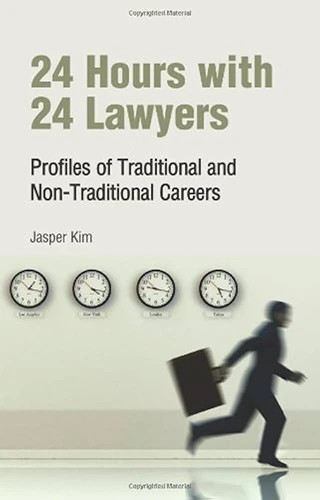
24 Hours with 24 Lawyers: Profiles of Traditional and Non-Traditional Careers by Jasper Kim
Recommended by Nikki Laubenstein.
From the publisher:
24 Hours with 24 Lawyers: Profiles of Traditional and Non-Traditional Careers provides an “all-access pass” into the real-world, real time personal and professional lives of 24 law school graduates. These working professionals present a profile chronicling a typical 24-hour day in their traditional and non-traditional careers.
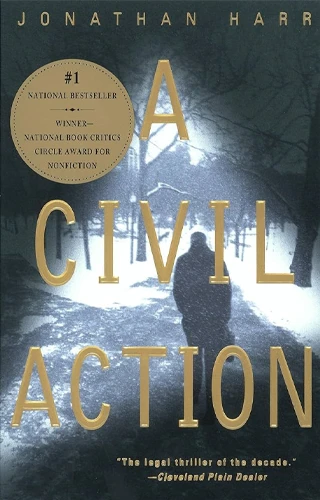
A Civil Action by Jonathan Harr
For a somewhat dated but still descriptive view of civil litigation. –Joe Pollak
From the publisher:
#1 National Bestseller, National Book Critics Circle Award Winner. Described as “a page-turner filled with greed, duplicity, heartache, and bare-knuckle legal brinksmanship” by The New York Times, A Civil Action is the searing, compelling tale of a legal system gone awry—one in which greed and power fight an unending struggle against justice. Yet it is also the story of how one man can ultimately make a difference. Representing the bereaved parents, the unlikeliest of heroes emerges: a young, flamboyant Porsche-driving lawyer who hopes to win millions of dollars and ends up nearly losing everything, including his sanity. With an unstoppable narrative power reminiscent of Truman Capote’s In Cold Blood, A Civil Action is an unforgettable reading experience that will leave the reader both shocked and enlightened.
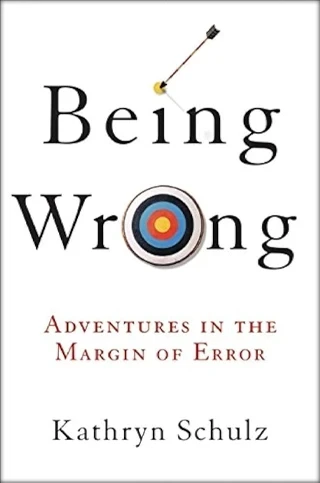
Being Wrong: Adventures in the Margin of Error by Kathryn Schulz
It’s an old book, but after years of working with law students, I found myself recommending it a lot. I like that it reviews the social science research and provides a lot of examples of the ways in which humans are hardwired to see themselves as right to avoid being wrong. As lawyers and students, we need to know that our brains would rather reach for an implausible solution that makes us right than accept the much more plausible reality that we just might be wrong. –Shannon Bartlett
From the publisher:
To err is human. Yet most of us go through life assuming (and sometimes insisting) that we are right about nearly everything, from the origins of the universe to how to load the dishwasher. If being wrong is so natural, why is our grasp of the psychology of belief so flawed that we are bad at imagining our ideas could be mistaken, and why do we react to our errors with surprise, denial, defensiveness, and shame? In the tradition of The Wisdom of Crowds and Predictably Irrational, Being Wrong explores the fascinating human cognition behind what it means to be in error, and why homo sapiens tend to tacitly assume (or loudly insist) that they are right about most everything. Kathryn Schulz argues that error is the fundamental human condition and should be celebrated as such. Guiding the reader through the history and psychology of error, from Socrates to Alan Greenspan, Being Wrong will change the way you perceive screw-ups, both of the mammoth and daily variety, forever.
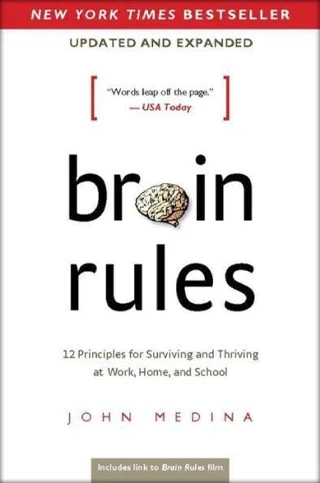
Brain Rules by John Medina
It’s about how to “hack” your brain. I’ve recommended this to hundreds upon hundreds of law students and have yet to hear anything but very positive reviews. –Mike Spivey
From the publisher:
How do we learn? What exactly do sleep and stress do to our brains? Is multi-tasking a myth? Why is it so easy to forget—and so important to repeat new knowledge? Do men and women really have different brains? Dr. Medina reveals 12 scientific rules about how our brains truly work.
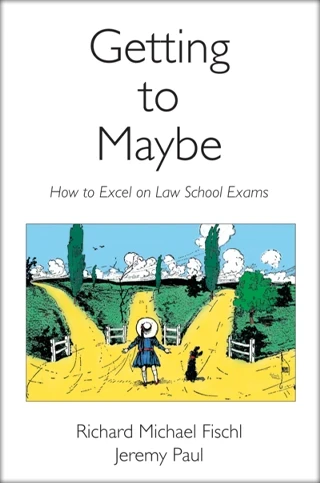
Getting to Maybe: How to Succeed on Law School Exams by Michael Fischl
For those headed to law school, with the caveat that it’s a bit abstract until you’re in class and thinking about the material. –Anne Dutia
From the publisher:
Getting to Maybe: How to Excel on Law School Exams has been the best-selling book on law exams since its original publication in 1999. It appears on summer reading lists at countless law schools, and professors often recommend it in first-year courses.
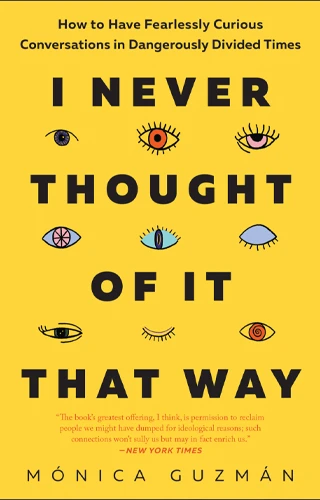
I Never Thought of It That Way by Mónica Guzmán
This book is great, and it very much addresses the problem of polarization on campuses. Specifically, it helps readers explore the psychology of how people order themselves, the importance of recognizing the echo chambers we inhabit (particularly on social media), how friction arises, and the importance of seeking to understand others’ perspectives. It also provides tangible techniques for pushing ourselves to pursue curiosity and wonder in our interactions with others, especially with those we profoundly disagree with. Law school often represents the first time students find themselves in classrooms discussing difficult political topics on sensitive subjects, and it is important to understand how to navigate those interactions with the curiosity the practice of law demands. –Shannon Bartlett
From the publisher:
Guzmán’s approach will help you to have adventurous and downright human conversations with the people in your life who have the most to show you: those whose identities, values, and experiences make them see the world in an entirely different and fascinating way. Along the way, you’ll learn that life is best lived with an open mind, and that the world around you is a much nicer place when you’re always ready to say, “I never thought of it that way!”
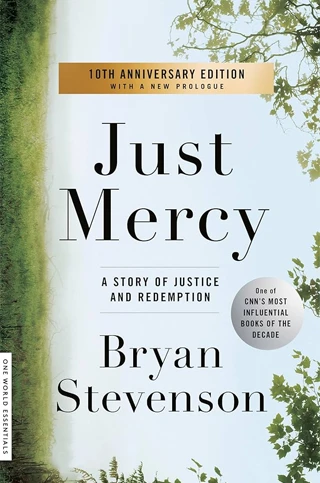
Just Mercy: A Story of Justice and Redemption by Bryan Stevenson
This book is a brilliant, moving memoir from Bryan Stevenson, an attorney, advocate, NYU Law professor, and founder of the Equal Justice Initiative. –Anna Hicks-Jaco
From the publisher:
Bryan Stevenson was a young lawyer when he founded the Equal Justice Initiative, a legal practice dedicated to defending those most desperate and in need: the poor, the wrongly condemned, and women and children trapped in the farthest reaches of our criminal justice system. One of his first cases was that of Walter McMillian, a young man who was sentenced to die for a notorious murder he insisted he didn’t commit. The case drew Bryan into a tangle of conspiracy, political machination, and legal brinksmanship—and transformed his understanding of mercy and justice forever. Just Mercy is at once an unforgettable account of an idealistic, gifted young lawyer’s coming of age, a moving window into the lives of those he has defended, and an inspiring argument for compassion in the pursuit of true justice.
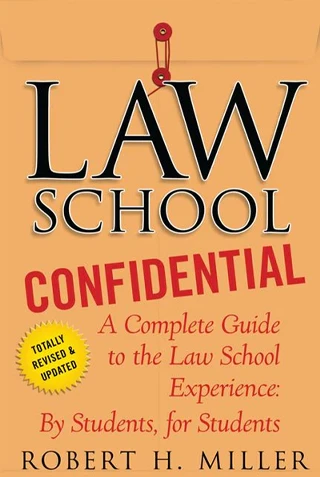
Law School Confidential: A Complete Guide to the Law School Experience by Robert Miller
While the latest edition was published in 2011, this book still provides a valuable overview of how to navigate the law school experience from start to bar prep. –Paula Gluzman
From the publisher:
Written by students, for students, Law School Confidential has been the “must-have” guide for anyone thinking about, applying to, or attending law school for more than a decade. Robert H. Miller has assembled a blue-ribbon panel of recent graduates from across the country to offer realistic and informative firsthand advice about what law school is really like. This updated edition contains the very latest information and strategies for thriving and surviving in law school—from navigating the admissions process and securing financial aid, choosing classes, studying and exam strategies, and securing a seat on the law review to getting a judicial clerkship and a job, passing the bar exam, and much, much more. Newly added material also reveals a sea change that is just starting to occur in legal education, turning it away from the theory-based platform of the previous several decades to a pragmatic platform being demanded by the rigors of today’s practices. Law School Confidential is a complete guide to the law school experience that no prospective or current law student can afford to be without.
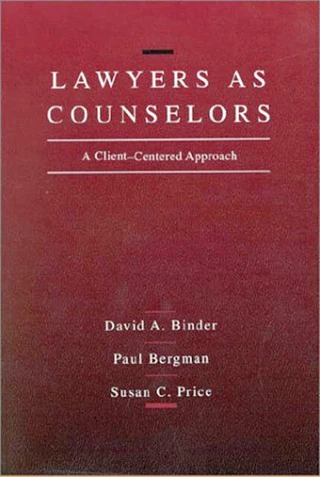
Lawyers as Counselors: A Client-Centered Approach by David Binder, Paul Bergman & Susan Price
A reminder of an important role lawyers play. –Nikki Laubenstein
From the publisher:
Part One examines problems clients usually bring and covers the necessity of a client-centered approach. Part Two presents the questioning and listening skills that attorneys need to gather information while encouraging active client participation. Part Three explains how to develop a story from the client’s perspective, then to probe it for evidence in light of individual factual propositions; it also focuses on transactional matters, identifying the type of data lawyers need to elicit in almost all business dealings. Part Four examines the counseling process and how to help clients make decisions, which reflect their legal objectives and values.
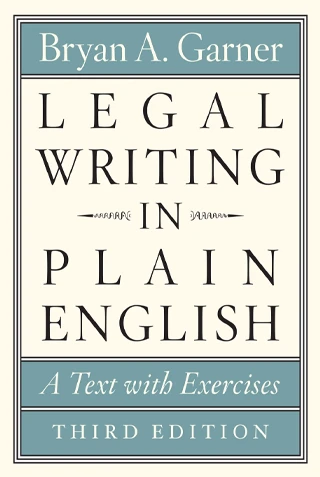
Legal Writing in Plain English by Bryan Garner
Best to read after starting the 1L year. –Joe Pollak
From the publisher:
Admirably clear, concise, down-to-earth, and powerful—all too often, legal writing embodies none of these qualities. Its reputation for obscurity and needless legalese is widespread. Since 2001, Bryan A. Garner’s Legal Writing in Plain English has helped address this problem by providing lawyers, judges, paralegals, law students, and legal scholars with sound advice and practical tools for improving their written work. Now the leading guide to clear writing in the field, this indispensable volume encourages legal writers to challenge conventions and offers valuable insights into the writing process: how to organize ideas, create and refine prose, and improve editing skills. Accessible and witty, Legal Writing in Plain English draws on real-life writing samples that Garner has gathered through decades of teaching experience. Trenchant advice covers all types of legal materials, from analytical and persuasive writing to legal drafting, and the book’s principles are reinforced by sets of basic, intermediate, and advanced exercises in each section.
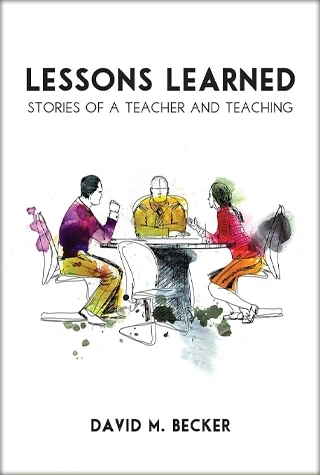
Lessons Learned by David M. Becker
These stories are written by a mentor and colleague of mine who taught law for 51 years and who provided a guiding influence to countless law school students, administrators, and deans. They serve as a wonderful supplement to One L by Scott Turow, as they go beyond the first year to offer perspectives throughout the law school experience, including lessons learned from colleagues, mentors, family, and above all, students. –Mike Spivey
From the publisher:
This book is about lessons learned (both conferred and received) by a fictional protagonist, E. Randall Mann, who was a law teacher at a major law school for over fifty years. There are nine stories or chapters that comprise this book. The stories appear as written in the first person by Mann and a fictitious student, Billie Williams, who served as Mann’s research assistant after he retired and ultimately wrote two of the stories in remembrance following Mann’s death.
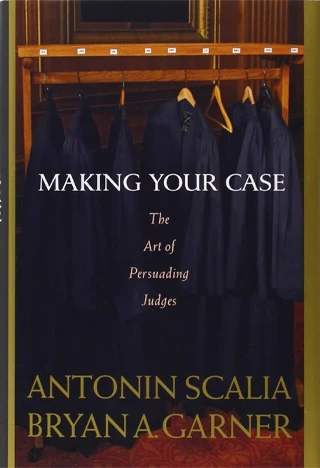
Making Your Case: The Art of Persuading Judges by Antonin Scalia and Bryan Garner
Best to read after starting the 1L year. –Joe Pollak
From the publisher:
Presents the basics of writing legal briefs and giving oral arguments, with discussions on the essentials of building a case through legal reasoning and the key elements of persuasive and successful oral pleading in the courtroom.
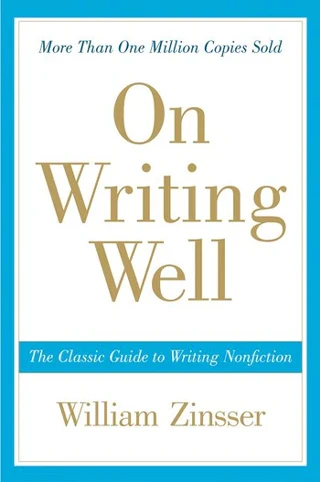
On Writing Well by William K. Zinsser
This is one of the best books for learning to write with clarity and conciseness. It was recommended by many legal writing professors and practitioners when I coordinated a writing program for “big law” summer associates. –Derek Meeker
From the publisher:
On Writing Well, which grew out of a course that William Zinsser taught at Yale, has been praised for its sound advice, its clarity, and the warmth of its style. It is a book for anybody who wants to learn how to write or who needs to do some writing to get through the day, as almost everybody does. Whether you want to write about people or places, science and technology, business, sports, the arts, or about yourself in the increasingly popular memoir genre, On Writing Well offers you both fundamental principles as well as the insights of a distinguished practitioner. With over a million copies in print, this volume has stood the test of time and remains a valued resource for writers and would-be writers.
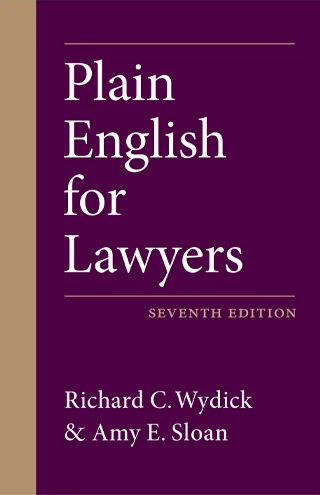
Plain English for Lawyers by Richard Wydick & Amy Sloan
This is a gem—the perfect small reference guide for all law students, especially 1Ls, and beloved by legal writing professors everywhere. –Jenn Kopolow
From the publisher:
Plain English for Lawyers has been a favorite of law students, legal writing teachers, lawyers, and judges for almost 40 years. The seventh edition, co-authored by Amy Sloan, updates this classic text while preserving all the approaches that make it such a standard in the field. Plain English for Lawyers remains (in size only!) a little book, small enough and palatable enough not to intimidate overloaded law students.
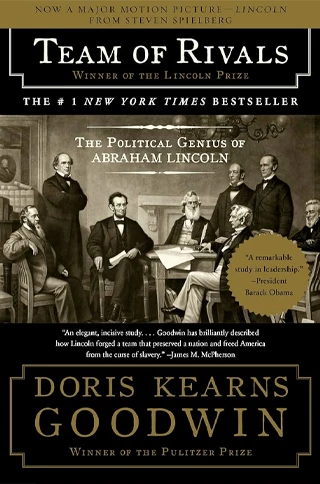
Team of Rivals: The Political Genius of Abraham Lincoln by Doris Kearns Goodwin
I think the core lessons are really good for a sometimes ego-driven profession, like law. It’s long, so it might be the one book an incoming student reads over the summer, but well worth it for the story of an Illinois lawyer whose presidential tenure yields critical leadership lessons on navigating conflict, managing difficult personalities, and leading with empathy and strength in challenging times. –Kristen Mercado
From the publisher:
This brilliant multiple biography is centered on Lincoln’s mastery of men and how it shaped the most significant presidency in the nation’s history. We view the long, horrifying struggle from the vantage of the White House as Lincoln copes with incompetent generals, hostile congressmen, and his raucous cabinet. He overcomes these obstacles by winning the respect of his former competitors, and in the case of Seward, finds a loyal and crucial friend to see him through.
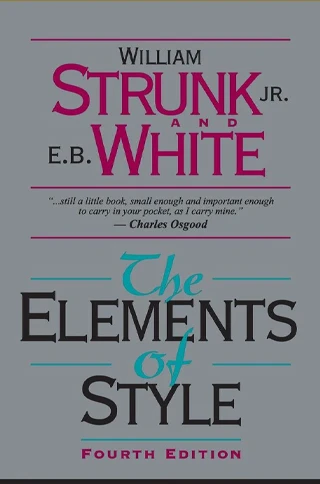
The Elements of Style by William Strunk & E.B. White
Like On Writing Well, this is one of the best books for learning to write with clarity and conciseness, and it was also recommended by many legal writing professors and practitioners when I coordinated a writing program for “big law” summer associates. –Derek Meeker
From the publisher:
You know the authors’ names. You recognize the title. You’ve probably used this book yourself. This is The Elements of Style, the classic style manual, now in a fourth edition. This book’s unique tone, wit and charm have conveyed the principles of English style to millions of readers.
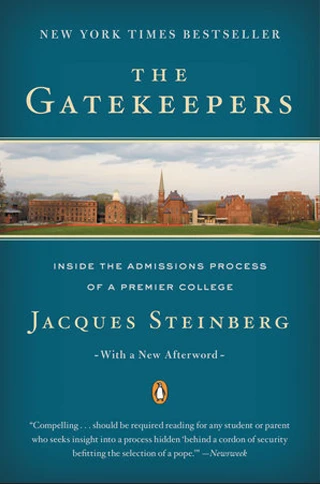
The Gatekeepers: Inside the Admissions Process of a Premier College by Jacques Steinberg
It’s about undergrad admissions at Wesleyan College. It isn’t a “how to get into school” book, but more of a “year in the life of admissions” book. It’s a good reminder that admissions officers are regular people. –Nicholas Everdell
From the publisher:
In the fall of 1999, New York Times education reporter Jacques Steinberg was given an unprecedented opportunity to observe the admissions process at prestigious Wesleyan University. Over the course of nearly a year, Steinberg accompanied admissions officer Ralph Figueroa on a tour to assess and recruit the most promising students in the country. The Gatekeepers follows a diverse group of prospective students as they compete for places in the nation’s most elite colleges.
The Happy Lawyer: Making a Good Life in the Law by Nancy Levit & Douglas O. Linder
Recommended by Nikki Laubenstein.
From the publisher:
The Happy Lawyer: Making a Good Life in the Law diagnoses and offers sensible solutions for a pervasive problem among lawyers—professional unhappiness and uses engrossing stories from real lawyers—both happy and unhappy—to illustrate their account.
The Little Book on Legal Writing by Alan L. Dworsky
A great resource for any writing, not just legal. –Shannon Davis
From the publisher:
This book is geared to the kind of writing first-year law students do in a standard legal writing course: memorandums and briefs. However, almost all the advice given applies to other kinds of legal writing as well, such as contracts and pleadings. In fact, much of the advice applies to nonfiction writing in general, because good legal writing is simply good writing.
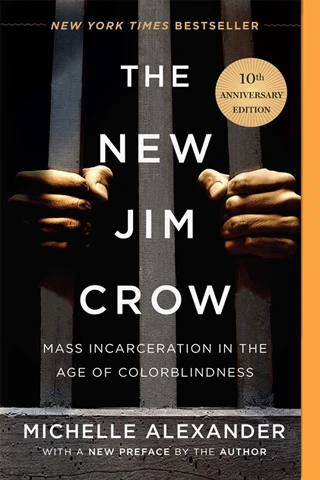
The New Jim Crow: Mass Incarceration in the Age of Colorblindness by Michelle Alexander
Anyone interested in practicing criminal law should take the time to read this important book, one that sheds vital light on some of the deep-rooted flaws of the U.S. criminal justice system. First published in 2010, the newest edition has a preface from the author that discusses the impacts that the book has had and an update on the state of criminal justice reform. –Anna Hicks-Jaco
From the publisher:
Seldom does a book have the impact of Michelle Alexander’s The New Jim Crow. Since it was first published in 2010, it has been cited in judicial decisions and has been adopted in campus-wide and community-wide reads; it helped inspire the creation of the Marshall Project and the new $100 million Art for Justice Fund; it has been the winner of numerous prizes, including the prestigious NAACP Image Award; and it has spent nearly 250 weeks on the New York Times bestseller list. Most important of all, it has spawned a whole generation of criminal justice reform activists and organizations motivated by Michelle Alexander’s unforgettable argument that “we have not ended racial caste in America; we have merely redesigned it.” As the Birmingham News proclaimed, it is “undoubtedly the most important book published in this century about the U.S.”
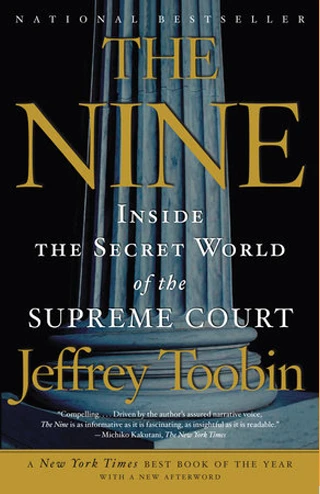
The Nine: Inside the Secret World of the Supreme Court by Jeffrey Toobin
Recommended by Joe Pollak.
From the publisher:
Acclaimed journalist Jeffrey Toobin takes us into the chambers of the most important—and secret—legal body in our country, the Supreme Court, revealing the complex dynamic among the nine people who decide the law of the land. An institution at a moment of transition, the Court now stands at a crucial point, with major changes in store on such issues as abortion, civil rights, and church-state relations. Based on exclusive interviews with the justices and with a keen sense of the Court’s history and the trajectory of its future, Jeffrey Toobin creates in The Nine a riveting story of one of the most important forces in American life today.
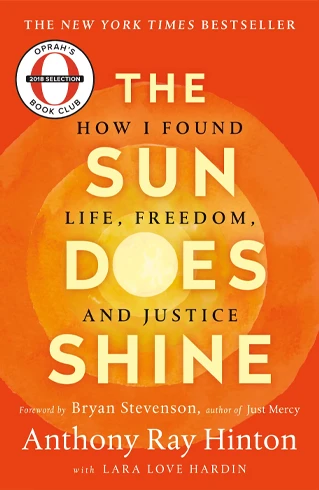
The Sun Does Shine: How I Found Life and Freedom on Death Row by Anthony Ray Hinton
A deeply personal, emotional, and insightful look into the individual human consequences that can result when the criminal justice system fails to achieve true justice—and how attorneys can work to right those wrongs. –Anna Hicks-Jaco
From the publisher:
In 1985, Anthony Ray Hinton was arrested and charged with two counts of capital murder in Alabama. Stunned, confused, and only twenty-nine years old, Hinton knew that it was a case of mistaken identity and believed that the truth would prove his innocence and ultimately set him free. But with no money and a different system of justice for a poor black man in the South, Hinton was sentenced to death by electrocution. He spent his first three years on Death Row at Holman State Prison in agonizing silence—full of despair and anger toward all those who had sent an innocent man to his death. But as Hinton realized and accepted his fate, he resolved not only to survive, but find a way to live on Death Row. For the next twenty-seven years he was a beacon—transforming not only his own spirit, but those of his fellow inmates, fifty-four of whom were executed mere feet from his cell. With the help of civil rights attorney and bestselling author of Just Mercy, Bryan Stevenson, Hinton won his release in 2015.
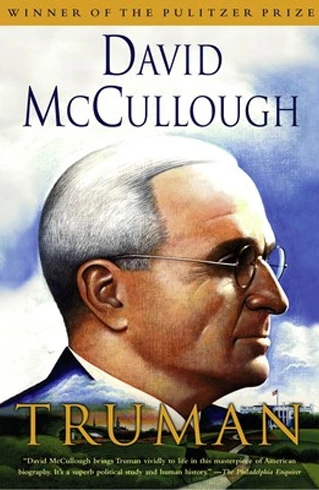
Truman by David McCullough
I like to recommend this book because it’s dense yet entertaining (what’s not to love about a judge who never went to law school and also became president?); a nice bridge to legal textbooks, in my opinion. –Nathan Neely
From the publisher:
The Pulitzer Prize-winning biography of Harry S. Truman, whose presidency included momentous events from the atomic bombing of Japan to the outbreak of the Cold War and the Korean War, told by America’s beloved and distinguished historian.
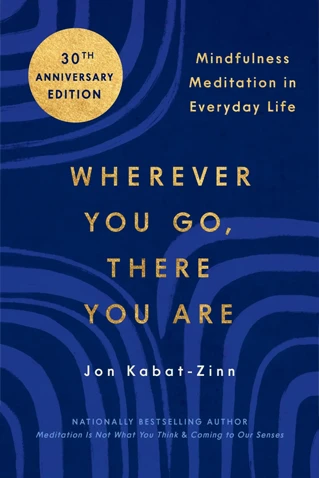
Wherever You Go, There You Are: Mindfulness Meditation in Everyday Life by Jon Kabat-Zinn
A personal recommendation for maintaining mental and emotional health—easy, accessible mindfulness practices (one of the best tools for overcoming anxiety). –Derek Meeker
From the publisher:
When Wherever You Go, There You Are was first published in 1994, no one could have predicted that the book would launch itself onto bestseller lists nationwide and sell over 1 million copies to date. Thirty years later, Wherever You Go, There You Are remains a foundational guide to mindfulness and meditation, introducing readers to the practice and guiding them through the process. The author of over half a dozen books on mindfulness, Jon Kabat-Zinn combines his research and medical background with his spiritual knowledge to help readers find peace and change their lives.
Bonus Non-Book Suggestion:
SCOTUSblog
SCOTUSblog reports on all cases that go before the U.S. Supreme Court and the resulting opinions. It’s most interesting in the late spring/early summer, toward the end of the term, when the court tends to release the toughest and most anticipated decisions.